


You’ll find Bitcoin and Ethereum represent your safest bets for digital currency investing. Bitcoin offers institutional-grade security and proven stability over 16+ years, while Ethereum provides access to programmable applications and DeFi opportunities. Both assets enjoy regulatory clarity and deep liquidity. Rather than chasing speculative altcoins, you’d benefit from a diversified approach emphasizing these established networks. Understanding how to properly allocate, stake, and store these assets will significantly impact your investment outcomes.
Table of Contents
Brief Overview
- Bitcoin offers institutional-grade security, liquidity, and regulatory clarity as the foundation digital asset for conservative investors.
- Ethereum provides programmable applications and DeFi access with Layer 2 scalability solutions for established alternative exposure.
- A 60/30/10 portfolio allocation (Bitcoin/Ethereum/emerging assets) balances stability with growth potential while capping speculative risk.
- Staking generates 3–12% annual passive income but requires evaluating lockup periods, validator risks, and smart contract security.
- Verify active development through GitHub activity, real transaction volume, and community engagement before investing in any digital currency.
Bitcoin: The Foundation Asset
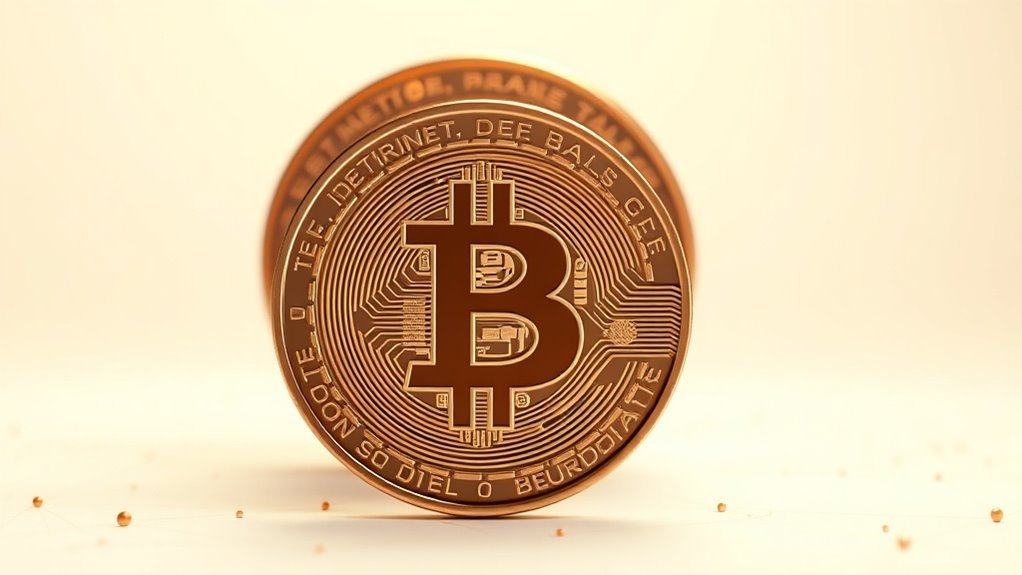
Bitcoin remains the largest and most liquid digital asset, with institutional adoption now embedded in pension funds and sovereign wealth funds via spot ETFs. You’re holding the original store of value that’s proven its security through 16+ years of operation without a successful breach.
Its network effects are unmatched—more miners, more nodes, and deeper liquidity mean your transactions settle with certainty. Bitcoin scalability has improved through Taproot and the Lightning Network, enabling faster payments without compromising settlement security.
Current regulatory clarity in the US and EU gives you confidence that Bitcoin adoption won’t face sudden prohibition. Major institutions now hold Bitcoin as portfolio insurance, validating it beyond speculative asset status. For conservative investors seeking proven digital currency exposure, Bitcoin remains the foundational choice. Moreover, its decentralized nature empowers underserved regions economically, further enhancing its appeal as a global asset.
Ethereum: Programmable Applications and DeFi
While Bitcoin anchors your portfolio as a settlement layer, Ethereum opens a different opportunity: you’re not just storing value, you’re accessing programmable networks where applications run directly on the blockchain.
Ethereum’s strength lies in its ability to host DeFi protocols—lending platforms, decentralized exchanges, and yield mechanisms—without intermediaries. You interact directly with smart contracts, though smart contract security remains critical; audits and code reviews reduce but don’t eliminate risk.
Key considerations:
- Ethereum scalability through Layer 2 solutions (Arbitrum, Optimism) reduces gas fees and transaction times.
- DeFi protocols expose you to liquidation risk and impermanent loss if you’re providing liquidity.
- NFT integration connects digital assets to Ethereum’s ecosystem, though valuations remain speculative.
- The importance of smart contract security is paramount, as vulnerabilities can lead to significant financial losses.
Ethereum’s versatility makes it fundamentally different from Bitcoin—complexity that demands deeper due diligence before committing capital.
How to Compare Digital Assets: Utility, Security, and Risk
Once you’ve decided to hold both Bitcoin and other digital assets, you need a framework for evaluating them—one that goes beyond price charts and social media sentiment. Start with utility assessment: Does the asset solve a real problem, and is it actually being used? Next, examine security measures. Review the project’s code audit history, developer team credentials, and whether it’s survived sustained attacks. Then conduct risk evaluation by analyzing tokenomics, regulatory exposure, and liquidity. Compare market trends against fundamentals rather than hype cycles. Finally, use asset diversification to balance your holdings—Bitcoin’s proven security model differs meaningfully from newer Layer 2 solutions or DeFi protocols. This methodical approach reduces speculation and anchors decisions in measurable criteria rather than emotion.
Staking for Passive Income: Rewards and Risks

The appeal’s straightforward: lock up your crypto holdings and earn yields without active trading. But staking strategies vary widely, and yield risks deserve serious attention before you commit capital.
When you stake, you’re typically locking funds for fixed periods. Rewards range from 3–12% annually depending on the asset and protocol. However, several risks warrant caution:
- Lockup periods restrict your access during market downturns, preventing you from exiting positions quickly
- Validator risk means your staked amount can be partially or fully slashed if the validator misbehaves or the network penalizes them
- Smart contract vulnerabilities in staking protocols can expose your funds to unexpected losses
Start small, use established platforms with audited smart contracts, and never stake more than you can afford to lose.
Layer-2 Networks: Higher Risk, Lower Fees
Layer-2 networks promise what Bitcoin and Ethereum can’t deliver at base layer: transaction speeds measured in milliseconds and fees measured in cents. These solutions—like the Lightning Network for Bitcoin—bundle transactions off-chain, then settle them periodically on the main blockchain.
You gain speed and cost efficiency, but you’re trading base-layer security for Layer 2 solutions convenience. Your funds sit in smart contracts or custodial channels, introducing counterparty risk. Fee structures are dramatically lower, yet you’re dependent on network liquidity and operator reliability.
For transaction scalability, Layer 2s excel. For risk management, you’ll want to start small. Move only what you can afford to lose into these networks. Monitor your channel partners and liquidity providers closely. The infrastructure is maturing, but it’s not yet as battle-tested as the base layer itself.
Building a 60/30/10 Portfolio: Allocation Framework
After weighing the speed-versus-security trade-offs of Layer 2 solutions, you’ll want a framework that balances your entire portfolio across different risk levels and asset classes. The 60/30/10 allocation model provides a practical structure for portfolio diversification and risk management.
Your core allocation breaks down as follows:
- 60% Bitcoin: Your primary holding—establishes stability and aligns with institutional adoption trends.
- 30% Established altcoins: Ethereum or similar Layer 1 blockchains with proven utility and developer ecosystems.
- 10% Emerging positions: Experimental protocols or Layer 2 networks where you can tolerate higher volatility.
This asset allocation strategy caps speculative exposure while maintaining upside participation. Your risk management improves because downturns in the 10% tier won’t derail overall returns. Moreover, Bitcoin’s fixed supply cap enhances its appeal as a reliable store of value. Rebalance quarterly to maintain these ratios, selling outperformers and buying underweight positions. This disciplined approach suits self-directed investors seeking sustainable investment strategies without chasing trends.
Where to Buy and Store: Exchanges, ETFs, and Custody Explained
Custody solutions range from self-custody hardware wallets (Ledger, Trezor) to qualified institutional custodians (Fidelity Digital Assets, Coinbase Custody). Self-custody demands discipline and backup procedures. Institutional custodians add fees but eliminate private key management risk. Your allocation’s size and risk tolerance determine the right choice. Additionally, using cold storage for your Bitcoin can significantly minimize the risk of online hacks and theft.
Avoiding Speculative Altcoin Traps
While Bitcoin’s institutional adoption has solidified its position as a store of value, the broader cryptocurrency market remains a minefield of speculative assets designed to extract retail capital. Altcoin volatility routinely exceeds Bitcoin’s swings, and speculative trends often collapse as quickly as they spike.
You’ll protect your capital by recognizing these patterns:
- Avoid narrative-driven tokens — projects built on hype rather than working infrastructure tend to underperform after initial euphoria fades.
- Ignore promises of 100x returns — if guaranteed outsized gains existed, institutional money would’ve already captured them.
- Verify active development and adoption — check GitHub activity and real transaction volume before committing funds. Regulatory uncertainty limits investor confidence, which can significantly impact the market dynamics of these speculative assets.
Bitcoin’s proven security model and network effects offer a fundamentally different risk profile than experimental Layer-1 blockchains or governance tokens chasing regulatory clarity.
Frequently Asked Questions
How Do Taxes Apply to Digital Currency Gains, and What Records Should I Keep?
You’ll owe capital gains tax on your digital currency profits. Keep detailed records of every purchase, sale, and trade—including dates, amounts, and prices paid. The IRS treats crypto as property, so maintain transaction documentation for at least seven years.
Can I Use Digital Currencies to Hedge Against Inflation or Currency Devaluation?
You’re essentially building a financial firewall. Yes, you can use Bitcoin as inflation protection and currency stability hedge—its fixed 21-million supply contrasts sharply with unlimited fiat printing. However, Bitcoin’s volatility means it’s a speculative hedge requiring conviction and a long-term outlook.
What’s the Difference Between Spot Prices and Futures Contracts for Digital Assets?
You’re buying Bitcoin at today’s price with spot trading, while futures trading lets you bet on tomorrow’s price without owning it. Futures amplify market volatility and risk—spot trading suits conservative investment strategies prioritizing asset ownership and safety.
How Do I Recover Access to a Wallet if I Lose My Private Keys?
You can’t recover lost private keys—they’re irretrievable. Your best protection? Use a hardware wallet, enable backups, and store your seed phrase securely offline. If you’ve already lost access, those funds are unfortunately gone permanently.
Which Digital Currencies Have Institutional Adoption, and Why Does It Matter?
Bitcoin dominates institutional interest, with major funds and corporations holding significant positions. Adoption impact matters because it signals legitimacy, reduces volatility risk, and increases liquidity—making your investments safer and more accessible through regulated channels.
Summarizing
You’ve now learned that crypto investing isn’t just throwing money at whatever coin’s got a cute dog mascot. You’ll diversify across Bitcoin, Ethereum, and Layer-2s like you’re actually building wealth instead of gambling. You’ll stake responsibly, store securely, and dodge those “revolutionary” altcoins promising 10,000% returns. Congratulations—you’re officially boring. That’s how you win.

