

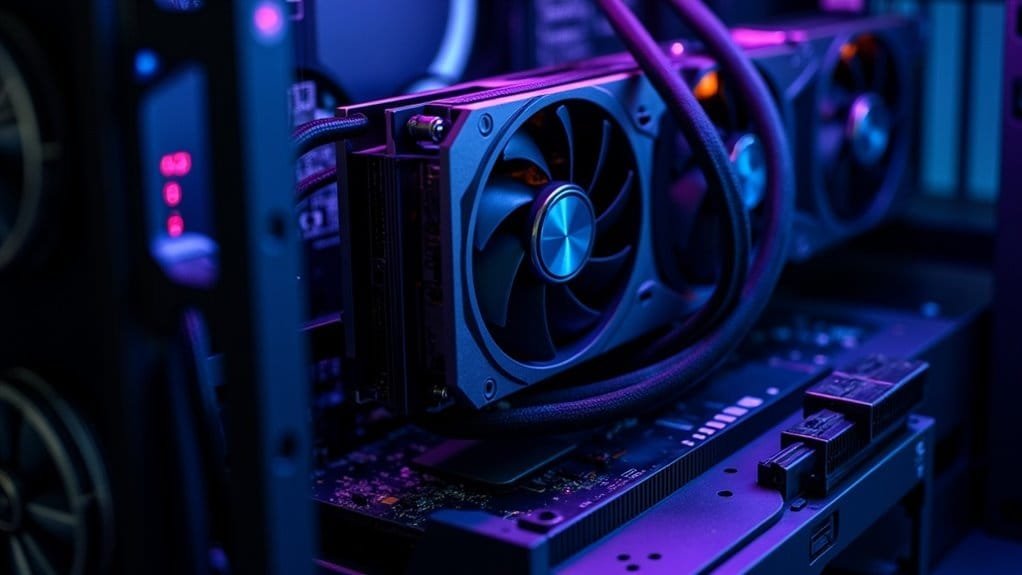
Start by calculating profitability, factoring in hardware, electricity, and market volatility. You’ll choose hardware based on the algorithm; Monero uses CPU-friendly RandomX, while Zcash’s Equihash favors GPUs. Assemble your rig, then optimize it with a mining OS and careful overclocking. Join a mining pool for steadier payouts, and secure your coins in a hardware wallet. Managing operational costs and heat is critical. Stick with this to master every step of the build.
Table of Contents
Brief Overview
- Choose mining hardware based on coin algorithms: ASICs for efficiency, GPUs for flexibility.
- Calculate profitability using hardware hash rate, electricity cost, and mining difficulty.
- Assemble the rig securely and optimize with dedicated mining software and OS.
- Join a mining pool for predictable earnings rather than attempting risky solo mining.
- Secure earnings with a hardware wallet and manage heat, power, and security costs.
The State of Privacy Coin Mining in 2026
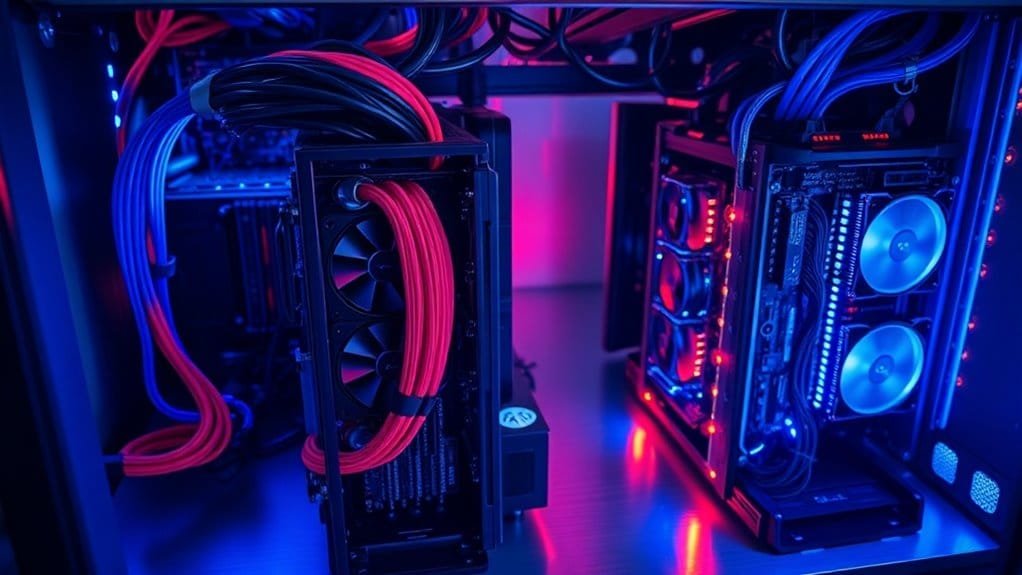
While regulators worldwide continue to tighten financial surveillance, the demand for transactional privacy persists, directly shaping the state of privacy coin mining in 2026. You’ll find that mining these assets remains a complex but vital operation. Many leading privacy coins utilize ASIC-resistant hashing algorithms, such as RandomX, which mandates the use of specialized hardware like high-end CPUs. This directly impacts your potential mining profitability, as you must carefully select a coin whose protocol aligns with your rig’s capabilities. Advances in mining technologies continuously emerge to enhance efficiency and circumvent regulatory pressures, requiring you to stay agile. Your setup must be future-proofed against shifts to new, privacy-enhancing algorithms that could render older hardware obsolete. The long-term viability of these projects increasingly depends on integrating regulatory-friendly technologies like zero-knowledge proofs to balance anonymity with compliance.
Calculate Profitability for Monero, Zcash, and Other Privacy Coins
Mining privacy coins successfully requires moving from selecting hardware to a rigorous financial analysis. You’ll use online calculators to calculate profitability, but your real-world income depends on several volatile factors that affect your operational security.
- Input your hardware’s hash rates and local power prices, as electricity costs are your largest recurring expense and directly erode profits.
- Model for regular mining difficulty adjustment, a network mechanism that can rapidly change your expected coin output, making static projections unreliable.
- Account for all operational costs, including the pool fees impact if you join a collective, which deducts a percentage from your rewards before distribution.
Understand Key Privacy Coin Mining Algorithms
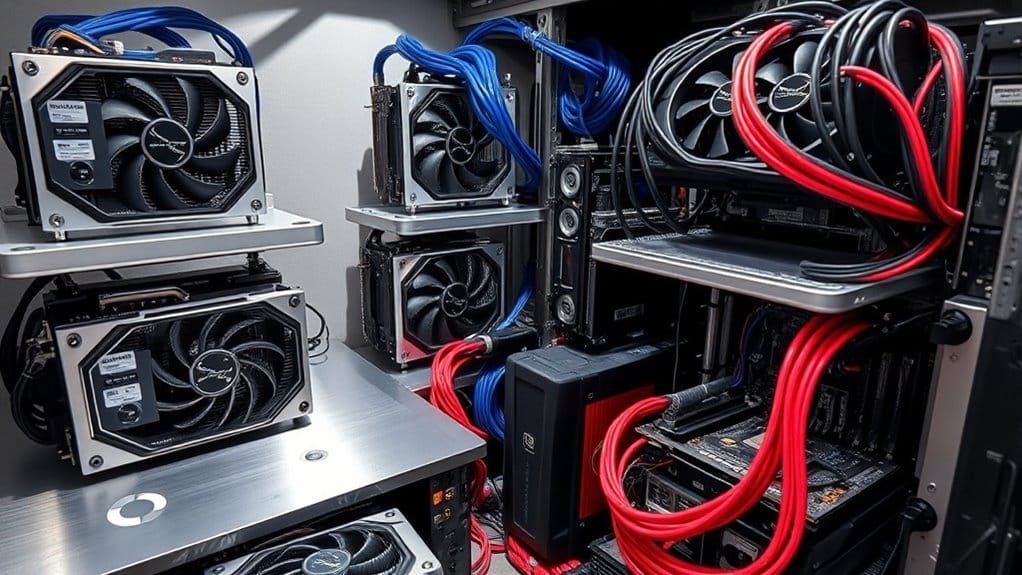
Selecting hardware is an essential step, but your mining rig’s actual performance hinges on the algorithm your chosen privacy coin uses. Most privacy coins operate on Proof-of-Work (PoW) consensus, but their mining algorithms differ for security. Monero uses RandomX, optimized for CPU mining to resist specialized hardware, while Zcash historically used Equihash, a memory-hard algorithm favoring GPU mining. Dash employs the X11 algorithm, chaining multiple functions. Your mining hardware must match these requirements; using the wrong equipment compromises efficiency and your operational security. For projects like Horizen, which emphasizes confidentiality and scalability, you must also consider its unique sidechain technology. Understanding these protocols ensures you build a resilient setup that protects your participation in this ecosystem.
Choose Hardware: GPUs vs. ASICs for Privacy Algorithms
- Algorithm Resistance: Many privacy algorithms are actively developed to remain ASIC-resistant, protecting network decentralization and your operational security.
- Operational Efficiency: While ASIC miners can have lower power consumption per hash, GPUs provide a balanced efficiency for complex, memory-hard computations.
- Long-Term Viability: GPUs let you adapt to new coins or algorithm changes, future-proofing your investment against a volatile regulatory landscape.
Source a Reliable Power Supply for 24/7 Operation
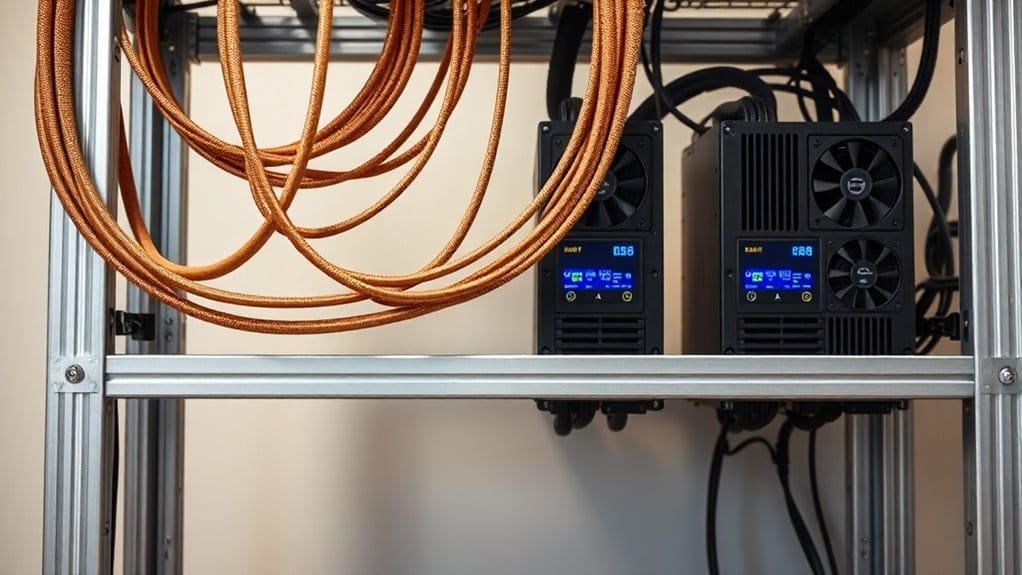
A power supply is the single most critical component for a stable mining operation, where a failure directly translates to financial loss. Your mining rig depends entirely on reliable Power Supply Units (PSUs). Calculate your total energy consumption and add a minimum 20% headroom to ensure stability under peak loads. For multi-GPU setups, invest in high-wattage PSUs from reputable brands like Corsair or Seasonic. Always choose an 80 PLUS certified unit for efficiency and safety. A modular PSU is ideal, as you only connect necessary cables, reducing clutter and fire risk. This careful selection prevents costly downtime and protects your hardware investment from electrical faults.
Select a Frame and Cooling System for Dense Rigs
- Choose an open-air frame design. This maximizes ambient airflow around all components, which is far safer and more effective than enclosing hot GPUs.
- Implement dedicated high-CFM fans. Position them to create a directed path for hot air to exhaust away from your hardware.
- Establish a rigorous dust management protocol. Regularly clean all intake filters and components to prevent flammable debris accumulation that chokes your cooling system.
Assemble Your Mining Rig Hardware Step-by-Step
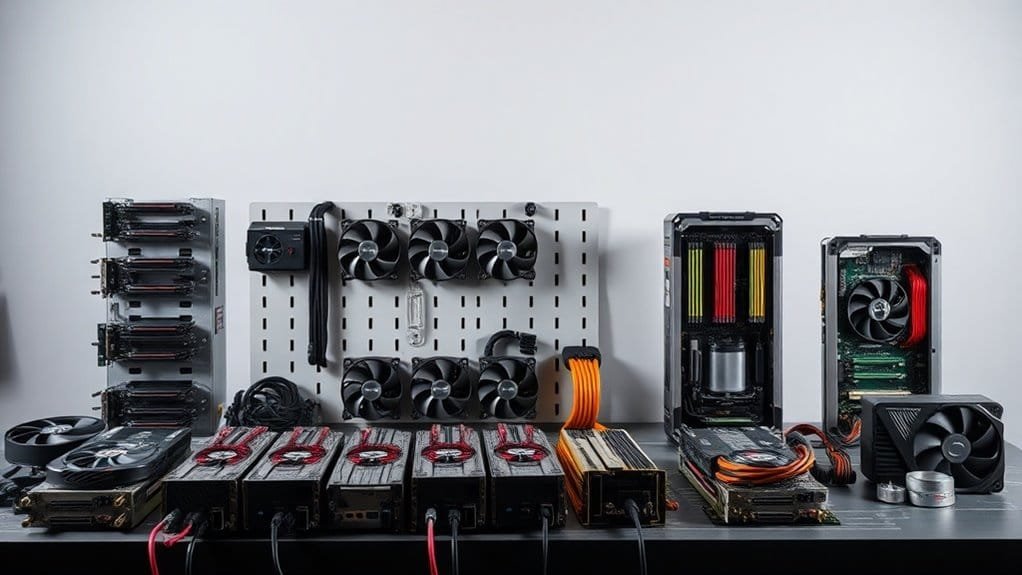
Six core steps transform a collection of components into a functional mining rig. First, install the CPU onto your selected motherboard. Secure your RAM. Connect your GPUs using PCIe risers, ensuring proper spacing for safe airflow. Attach a capable power supply, verifying all connections are firm to prevent fire hazards. After a careful visual inspection, power on the system. You’ll then install your chosen mining software, which you configure for your specific hardware and coin. Finally, tune the settings for optimal performance and stability, monitoring temperatures closely. This methodical assembly ensures a safe, efficient operation from the first boot.
Install a Mining-Optimized Operating System
With your hardware assembled, you need a reliable operating system to manage it. A dedicated Mining-Optimized OS like SimpleMiningOS (SMOS) is purpose-built for stability, offering centralized management and pre-loaded software to simplify your setup and enhance operational security. You can also use its dashboard for regular power consumption monitoring to help identify and address inefficiencies.
- Setup & Installation: Download your chosen OS image and flash it to a USB drive using Etcher. Boot your rig from the USB to complete the installation, which will automatically install the necessary software for major mining programs.
- Configuration: You’ll then configure the OS by entering your wallet address and pool details via a web dashboard, a secure process that keeps your operational parameters in check.
- Maintenance: Use the dashboard to monitor performance metrics like temperature and hash rate. Apply regular updates to patch security vulnerabilities and maintain optimal efficiency.
Configure Mining Software for Your Chosen Privacy Coin
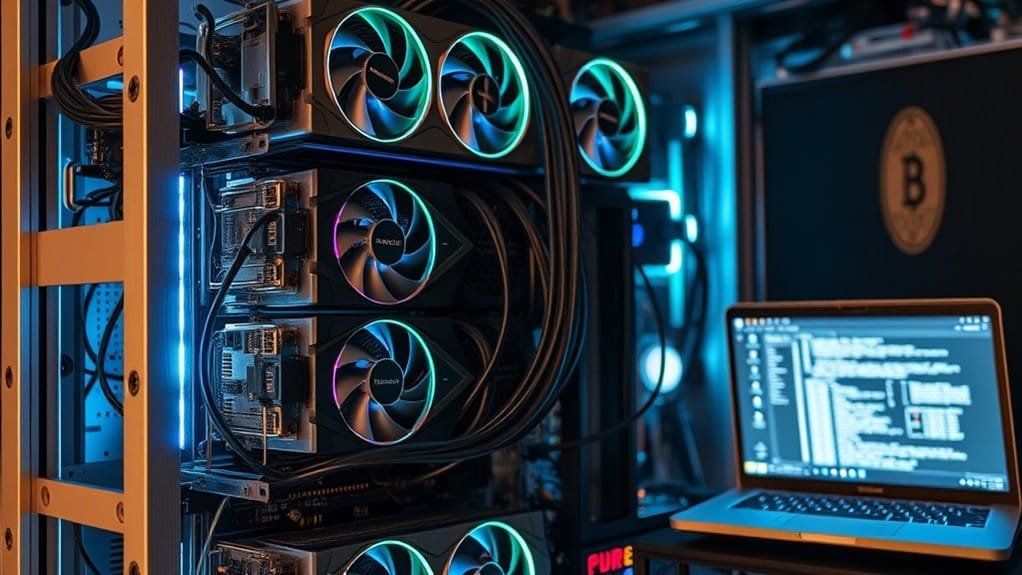
After installing a mining-optimized operating system, you must now select and configure your mining software to interact with the network of your chosen privacy coin. First, ensure you install dependencies like the RandomX library for Monero. Correctly entering your wallet address into the mining software configuration is vital for secure payout receipt, and for coins like Zcash, you may choose to direct payouts to a shielded address for enhanced transaction confidentiality.
| Configuration Item | Purpose for Security & Performance |
|---|---|
| Wallet Address | Ensures rewards are sent to your secure, private wallet |
| Pool URL & Port | Directs your rig to a trusted mining pool server |
| Worker Name | Identifies your rig for pool-side monitoring |
| Intensity/Threads | Optimizes hash rate while maintaining safe hardware temps |
You’ll then launch the mining process and monitor its performance via the software’s real-time dashboard for hash rate and temperature.
Join a Mining Pool or Consider Solo Mining
- Assess Your Hashrate: Solo mining is typically only viable with immense, dedicated computing power. For most, a mining pool is the safer, predictable choice.
- Understand Pool Fees: Pools charge small fees (1-2.5%) for managing payouts and infrastructure, which reduces your share but guarantees regular income.
- Calculate Operational Stability: Pools help stabilize earnings against network difficulty shifts, protecting your investment from prolonged dry spells.
Set Up a Secure Wallet for Private Rewards
| Security Practice | Key Benefit |
|---|---|
| Using a Hardware Wallet | Isolates private keys from internet threats |
| Choosing a Non-Custodial Wallet | Grants you full, exclusive asset control |
| Enabling Two-Factor Authentication | Adds a critical layer to account access |
| Maintaining Physical Backups | Ensures recovery from device loss or failure |
For maximum privacy when storing mined coins, consider using wallets that support stealth addresses or confidential transactions.
Optimize Software Settings for Maximum Efficiency
While hardware choice determines your rig’s potential, its realized efficiency hinges entirely on software configuration. To optimize your system, start with a secure, streamlined operating system like SimpleMiningOS. This specialized software simplifies management for a small monthly fee. Your primary focus should be fine-tuning your GPU settings to maximize hashrate while protecting your investment from thermal damage.
- Use a Managed OS: Implement a dedicated mining OS for stable, pre-configured miner software, reducing setup complexity and security risks.
- Calibrate GPU Parameters: Carefully overclock your GPU core and memory within safe limits while setting a strict power limit to optimize performance per watt.
- Monitor System Health: Use your software’s dashboard to continuously track temperatures and performance, ensuring stable, efficient operation and preventing hardware failure.
Manage Operational Costs: Electricity and Heat

Once you’ve dialed in your software, the operational costs of electricity and heat become your primary constraints on profitability. Your energy consumption, whether from GPUs or an ASIC Miner, directly determines your electricity bills. At typical residential rates, a rig can add over $90 monthly to your costs. You must implement effective cooling solutions like dedicated fans to manage the substantial heat output. This prevents dangerous overheating, protecting your hardware from damage and fire risk. Carefully monitor your total power draw and ambient temperature. Proactive management of these factors safeguards your investment and keeps your operational costs predictable, turning a risky operation into a controlled, sustainable endeavor.
Secure Your Mining Operation and Anonymize Payouts
- Fortify Your Storage: Move mined coins off the rig into a hardware wallet. This physical device keeps your private keys offline, making them immune to remote hacking attempts.
- Hide Your Digital Footprint: Use a VPN during all mining-related activities. This masks your IP address, making it harder for adversaries to target your network or trace your operations.
- Anonymize the Transaction: Opt for payouts in a privacy coin. These currencies use advanced cryptography to obscure transaction details on the blockchain itself. For maximum obfuscation, consider a coin like Monero which uses ring signatures and stealth addresses to ensure untraceable transactions.
Monitor Performance and Troubleshoot Hardware Failures
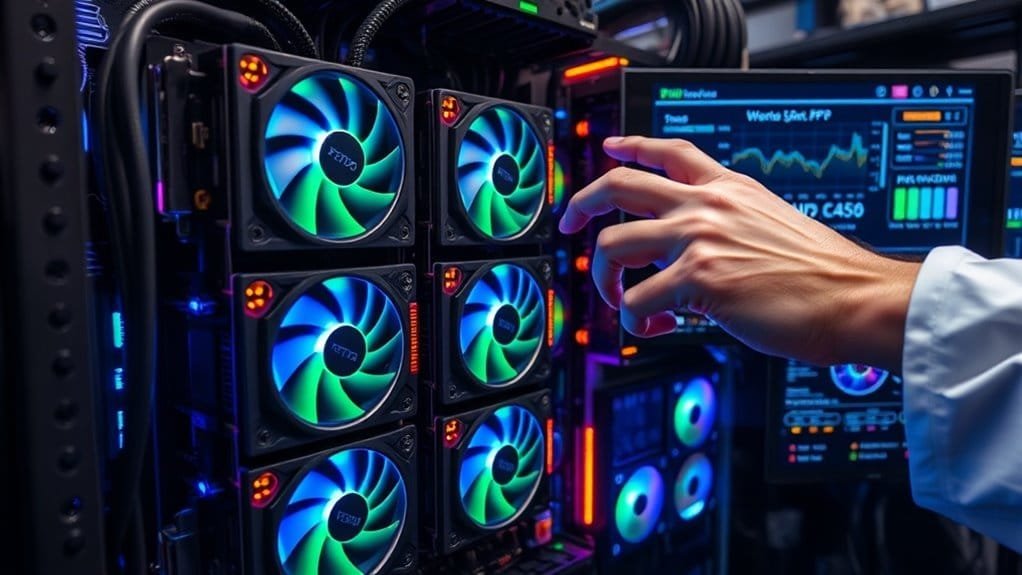
Even though a mining rig is operational, you must proactively manage its hardware to maintain efficiency and profitability. Continuous performance monitoring is essential for safety and stability. Use dedicated software like MSI Afterburner to track your GPU temperatures, aiming to keep them safely below 75°C. Employ a full dashboard like SimpleMiningOS for real-time tracking of hash rates and overall hardware status. Establish a cleaning schedule to prevent dangerous dust buildup that causes overheating. Configure software alerts for immediate notification of hardware failures, such as a sudden hash rate drop or temperature spike. You must also regularly apply software and firmware updates to protect against security vulnerabilities and maintain optimal, safe operation. This emphasis on robust encryption technology for secure systems mirrors the foundational security principles of privacy coins.
Frequently Asked Questions
How to Build Your Own Crypto Mining Rig?
Your key decisions are GPU selection, power supply capacity, and effective cooling solutions. You’ll then configure reliable mining software and join a trusted mining pool for consistent, secure earnings. Always prioritize electrical safety.
How Much Does It Cost to Build a Crypto Mining Rig?
Forget the gold rush; your initial investment starts around $1,500. Your hardware options and power consumption drive cost, needing efficient cooling solutions. Proper profit calculations are key for a safe venture.
How Long Will It Take to Mine 1 Bitcoin?
It depends entirely on your hardware, but solo mining could take years. Compare mining hardware specs, consider electricity cost impact, and understand the benefits of pool mining to get smaller, regular payouts instead.
Is Building a Bitcoin Mining Rig Worth It?
Building a mining rig? That’s like a steam engine in the electric age. Consider today’s profit margins versus your electricity costs. Hardware selection, mining difficulty, and market trends all determine if it’s safe to start.
Summarizing
You’ve assembled more than a machine; you’ve built your own economic engine. As it hums, remember it’s a living entity needing your constant attention. Balance its thirst for power against the stream of coin. Your vigilance in monitoring and optimizing is the rudder that steers this ship toward profit. Now, with the protocols set and hardware tuned, your journey from investor to active miner begins. Keep a steady hand

