

For maximum security, you should prioritize non-custodial, open-source wallets. Top hardware options include Trezor Model T for Monero and Coldcard with its built-in CoinJoin. With software wallets, you must activate features like Tor and generate new addresses for every transaction. Remember to always hold your own private keys. Your choices become crucial as regulations evolve, and finding the right balance is key for lasting protection.
Table of Contents
Brief Overview
- Prioritize non-custodial wallets where you control the private keys for true security.
- Hardware wallets like Trezor and Coldcard offer the most secure offline key storage.
- Select wallets with mandatory Tor integration to hide your network-level activity.
- Ensure your wallet supports built-in privacy features like CoinJoin or stealth addresses.
- Regularly update open-source wallet software to benefit from community security audits.
What Defines a Secure Wallet for Privacy Coins in 2026?
Security for privacy coin wallets requires built-in support for cryptographic privacy features like stealth addresses and CoinJoin to prevent blockchain analysis. This core transaction anonymity is non-negotiable. You must retain control, meaning you only use non-custodial wallets where you alone hold the private keys. Look for advanced privacy through mandatory Tor integration to hide your network activity. Essential security features include multi-signature functionality to prevent single-point failures. Always verify the wallet’s software is open source and receives regular updates, ensuring ongoing community audits and prompt vulnerability patches. To ensure longevity in a regulated market, prioritize wallets exploring regulatory-friendly technologies like zero-knowledge proofs to balance privacy with compliance. Without these foundational elements, your privacy coins remain exposed in today’s surveilled environment.
Privacy Wallet Types: From Hardware to Software Solutions
While the principles of secure privacy coin storage are foundational, your choice of wallet type dictates how these principles are implemented in practice. A hardware wallet offers the most robust secure storage, isolating your private keys from internet-connected devices. For greater convenience, software wallets provide strong security with advanced features for managing privacy coins. Mobile wallets balance user experience and safety for on-the-go access. For institutional or high-value holdings, multi-signature wallets add critical transaction approval layers. You can also explore decentralized options that operate without custodians. Each type manages transaction fees and key security differently, directly impacting your control over private transactions. This control is essential for utilizing advanced features like zk-SNARKs technology or ring signatures.
Top Hardware Wallets for Privacy-First Crypto Storage
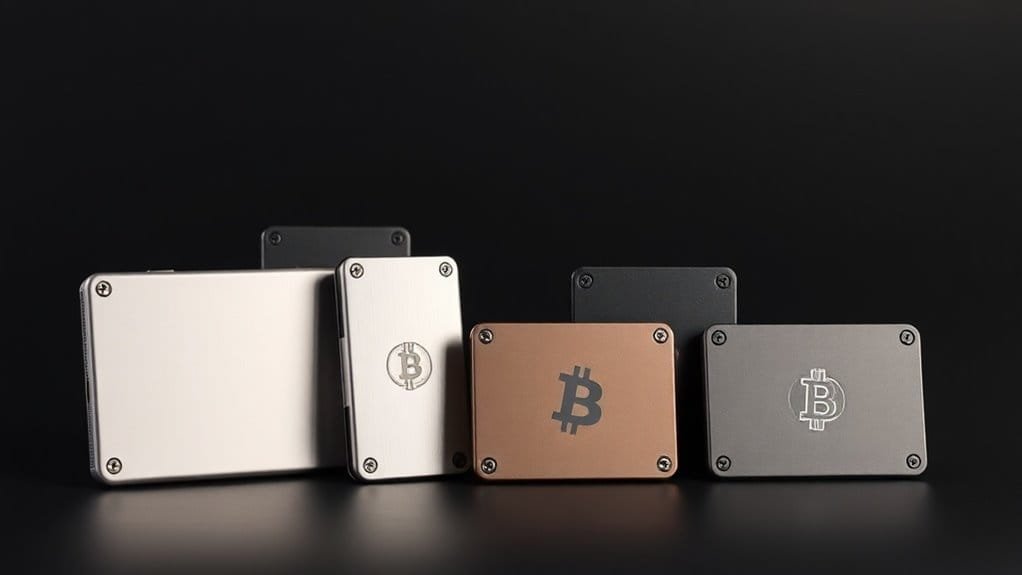
As regulatory scrutiny tightens and exchanges delist privacy coins, your choice of a hardware wallet becomes a critical pillar of financial autonomy. You need dedicated hardware wallets providing secure storage away from online threats. The Trezor Model T supports Monero with advanced security features like Shamir Backup. The Ledger Nano X also secures assets like Zcash with its Secure Element chip. For Bitcoin-centric privacy, the Coldcard Wallet integrates CoinJoin. The affordable SafePal S1 uses a secure chip and companion app. The open-source BitBox02 offers a user-friendly interface for several privacy coins. Each device ensures your private keys never leave the offline vault. These offline solutions are crucial for maintaining fungibility and censorship resistance, benefits highlighted by the core technology of leading privacy coins.
Configuring Software Wallets for Maximum Anonymity
- Leverage Advanced Features: Activate built-in tools like CoinJoin to obscure transaction trails and use Tor integration to mask network-level data. For example, Verge utilizes Tor and I2P technologies to obfuscate user IP addresses.
- Maintain Operational Security: Always update your wallet software to patch vulnerabilities. Generate a new receiving address for every incoming payment to prevent address linkage.
- Minimize Identity Exposure: Strictly avoid connecting your wallets to services requiring KYC, which can permanently shatter your financial privacy.
Using Privacy Wallets Amidst Global Regulatory Shifts
To navigate the tightening regulatory landscape of 2026, you need a wallet strategy that prioritizes both privacy and practical resilience. Choose non-custodial wallets and decentralized exchanges to access privacy coins without mandated Know Your Customer checks, countering restrictive regulatory frameworks. Prioritize a crypto wallet with robust anonymity features, as major exchanges increasingly delist these assets. Your primary security layer becomes the privacy-focused wallet software you control. Remember, holding your keys in these cryptocurrency wallets ensures autonomy, but monitor legal shifts that could impact wallet functionality or network access, requiring adaptable operational security. Opt for wallets that integrate advanced technologies like zk-SNARKs and ring signatures to cryptographically guarantee transaction confidentiality and untraceability.
Frequently Asked Questions
How Often Should I Update My Wallet’s Firmware?
Update firmware as soon as security patches are released. Enable user notifications from your manufacturer. Prioritize wallet compatibility by always backing up before update procedures to handle potential errors, requiring consistent wallet maintenance.
Can a Hardware Wallet Still Leak Metadata?
Yes, your hardware wallet can leak metadata through its interactions with network services or interfaces, compromising transaction anonymity despite robust private key safety. Your own user behavior often creates the largest digital footprint.
What Happens if My Privacy Wallet Provider Shuts Down?
What’s your backup plan? You’ll lose customer support and face asset recovery challenges. Prioritize provider reputation and robust backup strategies to maintain transaction security, while exploring wallet alternatives promptly to mitigate privacy risks.
How Do I Prove the Legitimacy of a Transaction for Tax Purposes?
Keep detailed transaction documentation yourself, including receipts and wallet backups for crypto audits. Use blockchain verification for expense tracking and consult a tax professional on navigating privacy regulations for financial transparency in tax reporting.
Are Mobile Wallets Secure Enough for Long-Term Storage?
Mobile wallets are dramatically insufficient for long-term storage. You’ll face inherent software vulnerabilities; a hardware wallet or deep cold storage is critical for securing your private keys against persistent, evolving threats.
Summarizing
Think of your wallet as a digital vault’s single key. You hold it, alone. In a world of watchful eyes and shifting rules, your choice of storage becomes your personal shield. Choosing correctly means your transactions don’t whisper in the wind, but move with the silence of deep, undisturbed water. You aren’t just storing value; you’re securing your right to unseen passage.

