

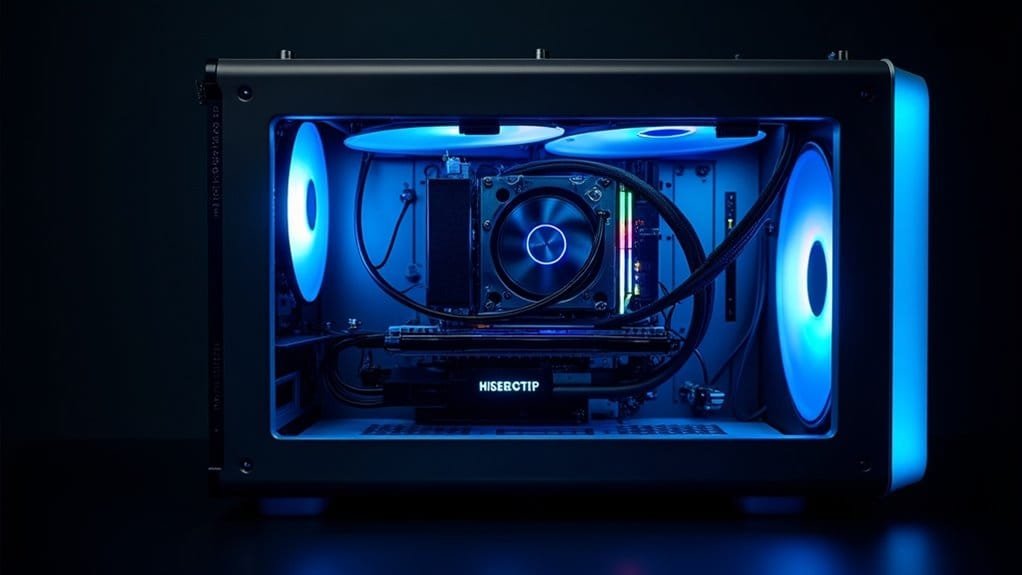
Mining Monero safely protects your investment and ensures profitability. You need to secure your wallet and use trusted software like XMRig to avoid malware. Effective mining means optimizing for RandomX, which favors CPUs, and staying ahead of rising network difficulty. It also keeps you compliant with evolving regulations. Following these practices lets you contribute to a vital, private network. You can discover the specific steps to achieve this below.
Table of Contents
Brief Overview
- Mining Monero supports the foundational privacy of a decentralized, secure network.
- Safe practices protect your wallet, funds, and mining hardware from malware and theft.
- Efficient mining maximizes profitability despite rising network difficulty and electricity costs.
- Adhering to best practices ensures compliance with evolving global regulations.
- It preserves the ASIC-resistant, democratic nature of Monero by using optimized CPUs.
Why Mining Monero in 2026 Requires a New Approach

As network difficulty rises and regulations tighten in 2026, your Monero mining operation can’t rely on outdated tactics. Achieving profitability now demands a focus on efficiency at every level. You must optimize your hardware for the RandomX algorithm and continuously update your strategies to stay competitive. Navigating the regulatory landscape is equally critical for a sustainable venture. Proactive engagement with evolving global compliance challenges is essential to avoid the severe consequences of non-adherence. This new approach ensures your participation supports the network’s decentralized and private nature while managing operational risks. Adapting isn’t just about higher hash rates; it’s about building a resilient mining practice that can withstand external pressures and align with the core values of Monero itself.
Step 1: Securing Your Monero Wallet and Setting Profitability Targets
While you can mine Monero anonymously, securing a wallet for your earnings demands deliberate action. Begin by securing your Monero wallet. Use a reputable option like the Monero GUI Wallet and apply strong security practices. This includes using only private Wi-Fi connections for any wallet-related activity. Always backup your wallet and its recovery phrase offline. Keep the software updated to ensure you receive the latest security enhancements and benefit from Monero’s continuous advancement of privacy features.
| Security Action | Purpose | Tool/Consideration |
|---|---|---|
| Choose a Secure Wallet | Protect private keys | Monero GUI Wallet |
| Implement Network Hygiene | Mitigate remote threats | Private Wi-Fi connections |
| Define Profitability Targets | Guide mining efficiently | Hardware efficiency & electricity costs |
You must set realistic profitability targets by analyzing your hardware efficiency and local electricity costs. This focus ensures you’re mining efficiently from the start.
Choosing Your Monero Mining Software: Security Above All

Because you’ll be connecting to the Monero network, your choice of mining software is a critical security decision. Select reputable software like XMRig, downloading it only from official sources to avoid malware that could compromise your operation. This open-source software is optimized for the RandomX mining algorithm, ensuring efficient performance. You must apply regular updates to maintain security and performance enhancements. Pair this with active antivirus protection to defend your system and secure your Monero wallet. Use the built-in monitoring tools within your mining software to track hash rates, allowing you to quickly identify any anomalous behavior that might indicate a security issue.
Securing Your Monero Mining Operation From Common Threats
Selecting secure mining software establishes one defense layer. Your broader security posture requires a multi-layered approach for securing your Monero mining operation against common threats. Always enable two-factor authentication on exchange and pool accounts. Use only trusted, updated mining software from official sources. Protect your wallet’s private keys with offline, encrypted backups. Routinely monitor hardware performance and temperature to prevent overheating and potential hardware damage. Be vigilant against phishing attempts via email or fake websites; never input credentials on unverified links. Finally, use a secure network connection and maintain general operational security to shield your assets. The privacy coin technology underlying Monero, such as ring signatures, helps secure your transactions from surveillance.
Monero’s RandomX Algorithm: Designed for CPUs, Resistant to ASICs
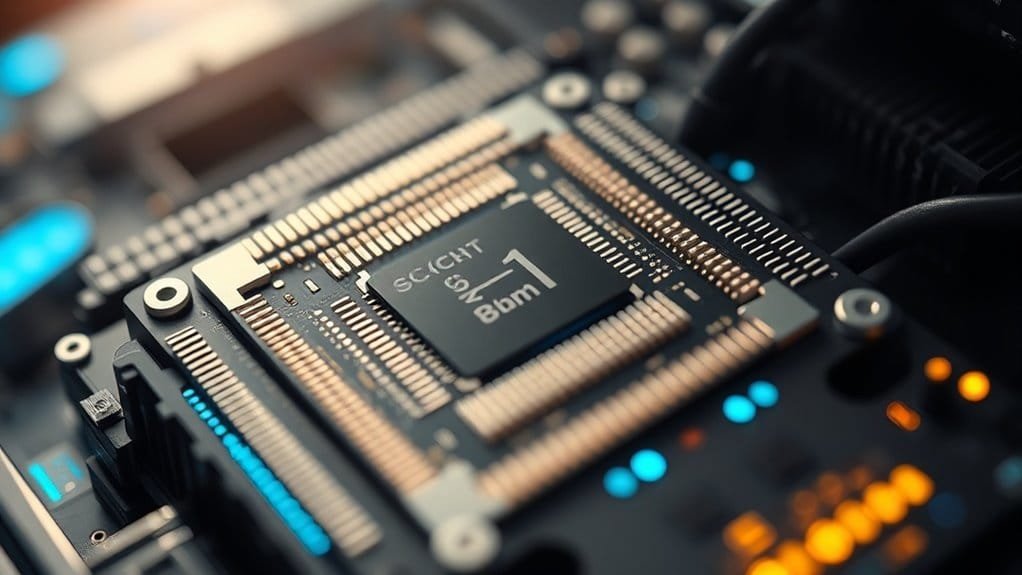
Mining Monero effectively demands an understanding of its unique RandomX algorithm, a CPU-first system engineered to democratize network security. This ASIC resistant design intentionally prevents specialized hardware from dominating, which fortifies the decentralized network. You can participate in the mining process using consumer-grade hardware like a modern desktop computer, as RandomX is optimized for CPU mining and uses a memory-hard approach. For Monero, CPUs often achieve better hash rates than GPUs. The algorithm dynamically adjusts mining difficulty to keep participation fair, ensuring these core privacy technologies remain secure and accessible, aligning with the project’s foundational values. To maximize your operation’s sustainability and savings, consider integrating a renewable energy integration strategy into your mining setup.
Should You Mine Solo or Join a Pool? Risk, Reward, and Privacy Trade-offs
Ultimately, your mining setup must decide between complete independence and shared resources. Solo mining enhances network security and grants you full control, but you’ll wait unpredictably for block rewards. Pool mining provides frequent payouts by combining hashing power, significantly improving mining efficiency and income stability. However, it introduces privacy trade-offs, as the pool operator may see transaction details, potentially conflicting with Monero’s core purpose of enabling untraceable transactions. For a balanced approach, consider the decentralized P2Pool. It merges the collective power of pool mining with greater individual autonomy, mitigating centralization risks while ensuring payouts. Your choice in Monero mining directly impacts your operational privacy and the network’s health; weigh these factors against your need for consistent rewards.
Calculating Monero Mining Profitability: Costs, Rewards, and Adjustments

Once you’ve chosen a mining approach, you must assess its financial viability. Your hash rate, determined by your CPU and GPU, directly influences success but faces high network difficulty. You must calculate earnings by factoring the block reward of 0.65 XMR against operational costs. Your largest recurring expense is electricity costs, which can erase profits if not managed. Joining a pool incurs mining pool fees, typically 1-3%, reducing your share. Use online calculators and Monero mining software to model mining profitability accurately. To remain secure and profitable, continuously optimize setups for efficiency, ensuring your operation’s costs do not exceed its rewards. The privacy of your earnings is reinforced by Monero’s stealth addresses and ring signatures that anonymize transactions.
How 2026 Regulations Affect Monero Miners
While 2026’s regulatory environment tightens around digital assets, Monero miners face a distinct set of operational and compliance challenges. You must navigate heightened KYC protocols for exchanges, directly conflicting with Monero’s privacy features when cashing out. These compliance requirements could mandate personal disclosure, deterring new participants from crypto mining. Proposed tax changes may further erode profitability. If regulators classify XMR as a high-risk asset, monero miners face increased scrutiny. To operate anonymously, many will turn to decentralized solutions like P2Pool. Your safe strategy requires understanding these 2026 regulations and adapting your operational setup accordingly to mitigate legal risk while preserving the network’s privacy.
Is Monero Mining Still Worth It in 2026?
With regulatory pressure mounting in 2026, you’re right to question Monero mining‘s viability. Its ASIC-resistant RandomX algorithm remains a core strength, letting you mine effectively with standard CPUs and avoid specialized hardware risks. Your profitability hinges on managing electricity costs and navigating market volatility, but consistent block rewards from Monero’s tail emission provide a baseline incentive. Joining decentralized mining pools like P2Pool enhances your security by distributing power and ensuring regular payouts. Ultimately, Monero mining supports the network’s foundational privacy, which retains significant demand. For a miner prioritizing safety and a decentralized ethos, it continues to offer a substantively worthwhile endeavor when calculated carefully.
Joining the Monero Mining Community: Resources and Ongoing Development
Assuming you’ve assessed Monero mining’s viability, your next step is engaging with its active community. Joining the Monero mining community through forums and subreddits provides essential resources for safe operation. You’ll access tips for optimizing mining efficiency and learn about critical software updates for tools like XMRig, which maintain performance and security. The community’s ongoing development ensures RandomX stays ASIC-resistant, supporting fair mining. For enhanced security, consider community-driven decentralized mining solutions like P2Pool to reduce centralization risks. Engaging in discussions also helps you understand market trends, allowing you to adapt strategies safely within the current regulatory climate. This collaborative environment is key to secure, profitable mining.
Frequently Asked Questions
What Is the Most Efficient Way to Mine Monero?
Use modern CPUs, optimized mining software, and join a pool for stable rewards. Monitor difficulty levels and energy consumption; solo mining rarely yields returns. Profitability calculators help you assess costs against network security contributions.
How Secure Is Monero Mining?
Security is rock solid when your mining software and hardware work securely with the RandomX algorithm. Opting for reputable pool mining over solo mining protects network stability, which underpins its anonymity benefits.
Can You Mine 1 Monero a Day?
No, you can’t realistically mine 1 Monero daily solo. You’d need immense hash power. Use pool mining and analyze profitability; hardware requirements and energy consumption are critical factors given the high network difficulty and current block rewards.
Is It Still Worth It to Mine Monero?
Yes, Monero profitability depends on analyzing electricity costs, mining hardware options, and network difficulty. Compare mining pools, avoid solo mining risks, and calculate your return on investment using current cryptocurrency market analysis.
Summarizing
You’ll find your participation is both valuable and secure. In 2026, roughly 75% of the network’s hash rate comes from decentralized CPU miners like you, directly reinforcing Monero’s core privacy principle. By mining effectively, you don’t just earn; you become a vital part of this resilient infrastructure, ensuring private, fungible cash remains within your reach and strengthening the network against all external pressures.

