


Forget true anonymity on CEXs. Your KYC creates a permanent, traceable ledger linking your identity to all transactions. Automated systems flag deposits from mixers or privacy wallets, painting a target on your account. Using these tools risks freezes or demands for proof of funds. The evolving Travel Rule further erodes privacy by sharing your data. What you do next defines your exposure; the path to safer navigation starts here.
Table of Contents
Brief Overview
- Mandatory KYC permanently links your identity to wallet addresses, eliminating true anonymity on centralized exchanges.
- Deposits from privacy tools like mixers or CoinJoin often trigger automated surveillance and account flags.
- Privacy-focused cryptocurrencies are treated as high-risk assets, leading to increased scrutiny and potential restrictions.
- Evolving regulations like the Travel Rule force exchanges to collect and share more user transaction data.
- Stored KYC data creates a long-term target for data breaches, exposing your sensitive personal information.
The End of True Anonymity on Centralized Exchanges
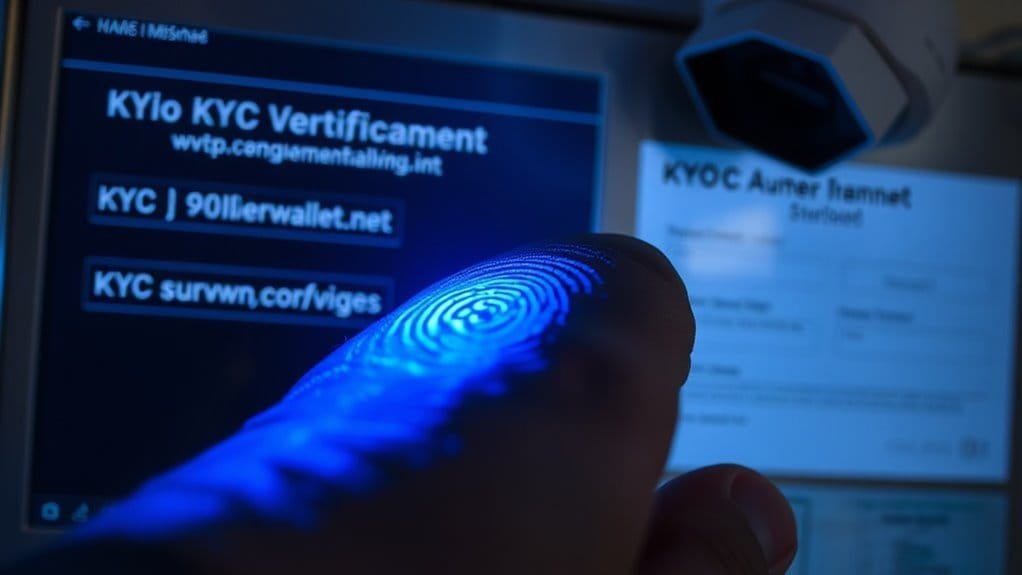
Although you can trade crypto pseudonymously, true anonymity effectively ends when you use a centralized exchange. These platforms require mandatory KYC checks, permanently linking your verified identity to your deposit addresses and transaction history. This foundational privacy breach creates a vulnerability. Major CEX data breaches have already exposed millions of users’ sensitive personal and financial records. Furthermore, public blockchain transparency allows analysts and regulators to correlate your personally identifiable information with your on-chain activity. Intensified global regulatory scrutiny forces these centralized exchanges to implement even stricter compliance, eroding any remaining anonymity, as demonstrated by major exchanges delisting specific privacy coins due to government pressure. Your quest for transactional privacy is fundamentally incompatible with using a KYC-bound platform, as your financial identity becomes permanently recorded and vulnerable.
How KYC Creates a Permanent Financial Identity Ledger
KYC compliance at an exchange does more than temporarily verify you. It forges a permanent, traceable link between your real-world identity and your digital assets. You submit sensitive personally identifiable information (PII) like your ID and address, which creates an immutable financial identity ledger. This record permanently correlates your bank account with your cryptocurrency addresses. Since blockchains are transparent, any transaction from your KYC-linked wallet can be traced back to you, erasing financial privacy. This ledger is often retained indefinitely, posing a risk if a data breach exposes your PII. You’re no longer anonymous; you’ve created a lasting financial profile that authorities or third parties can access. This underscores the critical need for privacy coins to integrate regulatory technologies that can balance anonymity with compliance.
Automated Surveillance: When Exchanges Flag Your Private Activity

Because your identity is now linked to your exchange account, automated surveillance systems actively monitor your transactions for signs of private activity. These systems use algorithms to flag deposits from protocols with strong privacy features, like mixers, CoinJoins, or privacy coins. While these coins use advanced encryption technology to protect user anonymity, this very feature triggers regulatory scrutiny. This intense automated surveillance is a direct result of stricter Anti-Money Laundering rules. When your transaction triggers an alert, the exchange’s compliance team reviews it. This can lead to temporary holds, demands for transaction explanations, or even account suspension if they deem the activity suspicious. The goal isn’t personal; exchanges are protecting their licenses. Your move towards privacy now carries a tangible risk of being flagged.
Using Privacy Tools as a Compliance Red Flag
Automated surveillance flags your deposits from private sources. Your use of tools for obfuscating transaction origins can draw immediate compliance scrutiny from regulated exchanges, as these actions are treated as potential indicators of illicit finance. This isn’t speculation; it’s how modern financial monitoring operates.
- Deposits from known mixers or CoinJoin transactions often trigger mandatory holds.
- Using privacy coins like Monero or Zcash can automatically mark your account as high-risk, particularly because these coins use ring signatures and stealth addresses to make transactions untraceable.
- Any transaction path attempting to break the audit trail raises a red flag.
- Repeated privacy tool use may lead to account restrictions or mandatory source-of-funds proof.
- This compliance scrutiny is a direct consequence of global anti-money laundering enforcement expansions.
Linking Your On-Chain Activity to Your KYC’d Account

If you’ve ever sent crypto from your exchange account to your own wallet, you’ve already linked your on-chain activity to your KYC’d identity. The exchange associates your personal information from its KYC processes with that initial transaction. Blockchain transparency means every subsequent transaction from that receiving address becomes part of a traceable, public ledger. This creates a permanent, identifiable pattern that links directly back to you. As regulatory scrutiny intensifies globally, this correlation is a foundational weakness. Your on-chain activity is no longer anonymous once it connects to a verified account. This documented chain poses a significant privacy risk, as the identifiable data patterns can be exploited if exposed. This stands in stark contrast to privacy-focused coins like Monero and Zcash, which utilize RingCT and zk-SNARKs to break this link by default.
The Direct Cost: Account Freezes and Withdrawal Holds
- Compliance with AML/KYC rules can trigger freezes for any transaction flagged as suspicious.
- Deposits from privacy tools like CoinJoin or Railgun often prompt mandatory holds for manual review.
- Exchanges require extensive additional documentation to unlock funds, causing prolonged delays.
- These operational actions directly aim to mitigate the exchange’s regulatory risk, not protect you.
- The result is a tangible loss of control and potential financial loss from missed opportunities.
- This is especially true for transactions involving privacy coins, which face increasing regulatory scrutiny globally.
Where Your KYC Data Goes After You Submit It

Account freezes highlight an immediate loss of control, but submitting your KYC documents initiates a separate, long-term risk. Your KYC data often resides in vulnerable databases on centralized exchanges (CEXs), where breaches routinely expose millions of records. These exchanges also share your information with third-party verification services, expanding its exposure. Regulatory mandates force CEXs to retain this data for years, creating a persistent target for cybercriminals. The core threat is correlation: once your identity links to a wallet address via KYC data, the public blockchain’s transparency allows anyone to track your financial activities. This permanent de-anonymization undermines any privacy you seek, turning your verified identity into a lasting liability.
Privacy Coin Delistings and the Shrinking Anonymous Toolkit
- You must now seek smaller, often less regulated platforms to trade assets like Monero, increasing counterparty risk.
- Your transaction anonymity becomes harder to achieve directly through trusted, liquid exchange channels.
- You’re pushed towards peer-to-peer trading methods, which carry higher security and fraud risks.
- The decreased exchange availability undermines the utility of privacy coins for routine, secure financial activity.
- You’re left navigating a fragmented market where secure access to core privacy tools is no longer guaranteed.
Why Mixing Services Fail to Protect Your Exchange Identity

While mixing services are popular tools for obfuscating transaction trails, they frequently fail to sever the link between your exchange identity and your on-chain activity. Sophisticated blockchain analysis can often correlate inputs and outputs over time, linking ‘cleaned’ coins back to your original deposit. These services also raise immediate compliance red flags, inviting heightened scrutiny that can trace the activity directly back to your exchange account. Furthermore, if you use a default wallet without advanced privacy features, you create identifiable behavioral patterns. Relying solely on mixing services provides a false sense of security, as they don’t guarantee true anonymity and can jeopardize your operational safety.
Trading on Exchanges in Restrictive Jurisdictions
- Trading in restrictive jurisdictions often triggers heightened scrutiny from regulators.
- KYC requirements can block access to major exchanges, pushing users to riskier platforms.
- Employing anonymity features on exchanges directly attracts regulatory attention.
- Unclear, non-harmonized laws across borders create complex legal exposure.
- Using privacy tools in high-risk areas can inadvertently flag you for suspicious activity.
Bridging the Gap: Your On-Chain Wallet and Your Off-Chain Identity
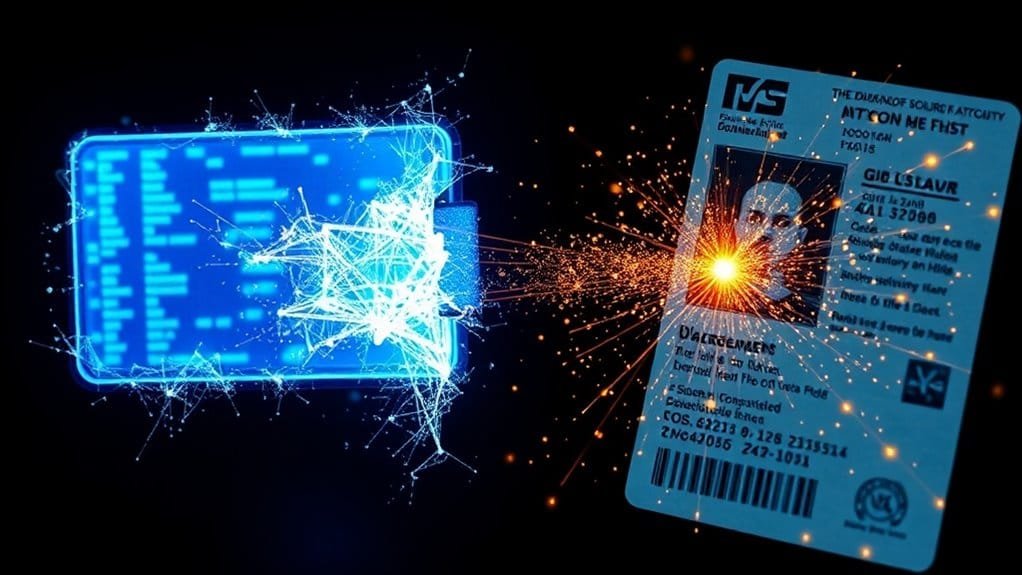
Financial anonymity is fractured where your wallet meets the world. When you use a regulated exchange, you provide your personally identifiable information (PII) for verification. This KYC data directly links your off-chain identity to your on-chain deposit addresses. Once that connection exists, sophisticated blockchain analysis can trace your subsequent transactions, severely compromising your anonymity. Major exchange data breaches have exposed millions of these sensitive records, allowing adversaries to correlate identities with wallet activity. This creates a permanent vulnerability; your financial history on the blockchain becomes tied to you. Regulatory compliance requires this data collection, but it fundamentally bridges the gap between your private wallet and your public identity, creating a key risk point.
The Limits of Withdrawing to a Private Wallet
- Exchange KYC protocols permanently link your identity to your withdrawal address.
- Automated systems flag frequent private wallet withdrawals for compliance review.
- The public ledger allows anyone to trace funds back to your initial exchange transaction.
- This pattern can attract regulatory attention as potential compliance evasion.
- Using external privacy-enhancing tools from exchange funds often triggers immediate scrutiny and risk.
Your transactional history remains exposed, creating ongoing anonymity risks.
The Travel Rule’s Evolution and Its Impact on Exchange Privacy

Understanding how withdrawal patterns expose you leads directly to the regulatory framework designed to formalize that surveillance: the Travel Rule. This rule mandates that exchanges collect and share your personally identifiable information (PII) for transactions, eroding transactional privacy. Its evolution drives stringent global compliance, forcing exchanges to link your identity directly to your wallet activity. You face increased de-anonymization risk as your PII is shared across platforms. This creates a fundamental tension between your need for safety and regulatory demands.
| Regulatory Pressure | Privacy Impact |
|---|---|
| Mandated PII Sharing | Direct Identity Linkage |
| Cross-platform Data Flow | Increased De-anonymization Risk |
| Penalties for Non-compliance | Reduced Exchange Privacy Options |
| Formalized Surveillance | Compromised Transactional Safety |
Decoding an Exchange’s Privacy Policy and Data Retention
- Scope of Collection: They define what personally identifiable information (PII) they gather—far more than just your ID.
- Retention Period: Policies specify how long they legally keep your data, often years after account closure.
- Third-Party Sharing: They list partners, like analytics firms or law enforcement, with whom they may share your PII.
- Breach Protocols: Examine their plan for notifying you if your linked data is compromised.
- Your Limited Control: Understand your rights, often restricted, to access or delete your stored information.
Operational Security: Protecting Your Identity Before, During, and After Trading

Since trading on a crypto exchange inherently exposes you to KYC verification and data leaks, the practice of operational security is essential for protecting your identity. You must safeguard your personally identifiable information (PII) from collection to post-trade phases. Before trading, use a VPN and consider employing non-KYC exchange services where possible. During activity, leverage privacy wallets and avoid linking your deposits directly to your exchange account. After trading, transfer funds through a privacy-enhancing tool like a mixer or a protocol using zk-SNARKs before moving them to a private wallet. This layered operational security helps obscure your trail from blockchain analysis, mitigating risks from data breaches and adversarial tracking.
Frequently Asked Questions
Can I Avoid KYC by Using a DEX?
Yes, you can often avoid KYC by using a decentralized platform. However, you trade regulatory protections for anonymity, gaining transaction privacy but assuming full user accountability and your own security measures.
Do Privacy Wallets Protect My Identity on Exchanges?
They don’t. Over 80% of major exchanges require full KYC. Your wallet’s security is irrelevant for your identity there; exchange policies mandate disclosure, negating transaction anonymity and centralizing your privacy concerns.
Is My Data Sold if an Exchange Gets Hacked?
Yes, it can be. Hacker motivations often include selling data, but your data security depends on exchange policies, which rarely allow this. Without your consent, such sales typically violate terms and privacy laws.
Can VPNS Hide My Location From Exchanges?
You can’t hide; exchanges often find your location despite VPNs, facing VPN limitations and anonymity challenges. Your data privacy depends on their exchange policies, which may require ID linking your IP anyway.
What Happens if I Send Funds From a Mixing Service?
Sending funds from mixing services breaks transaction tracing, challenging anonymity. Exchanges then scrutinize your fund legitimacy, possibly freezing assets. You face legal implications if flagged. Always conduct risk assessment before proceeding.
Summarizing
Your digital silhouette is now indelible. Treating an exchange like a speakeasy is folly, as KYC creates a permanent ledger linking all your activity. Your withdrawal to a private wallet merely starts a new, traceable chapter under automated surveillance. You must integrate operational security before, during, and after any transaction, understanding that your financial identity on these platforms is now etched in stone.

