


Securing your mining operation is essential because your profits are directly tied to your vulnerability. You face constant threats from theft, malware, and cyberattacks that can hijack your hardware or steal your rewards. Protecting your coins requires robust cybersecurity, physical safeguards for your rigs, and secure offline storage for your assets. Implementing these core principles shields your investment and keeps you mining. Exploring further reveals the specific steps you’ll need to take.
Table of Contents
Brief Overview
- Protecting assets with robust firewalls and encryption prevents unauthorized access and theft.
- Securing wallets and applying updates mitigates vulnerabilities and crypto-specific malware attacks.
- Safeguarding specialized hardware and operations reduces financial losses from physical damage or theft.
- Maintaining diligent security ensures regulatory compliance and prevents costly legal or tax penalties.
- Proactive monitoring and response plans minimize downtime and income loss from disruptions or breaches.
The Core Principles of Mining Security
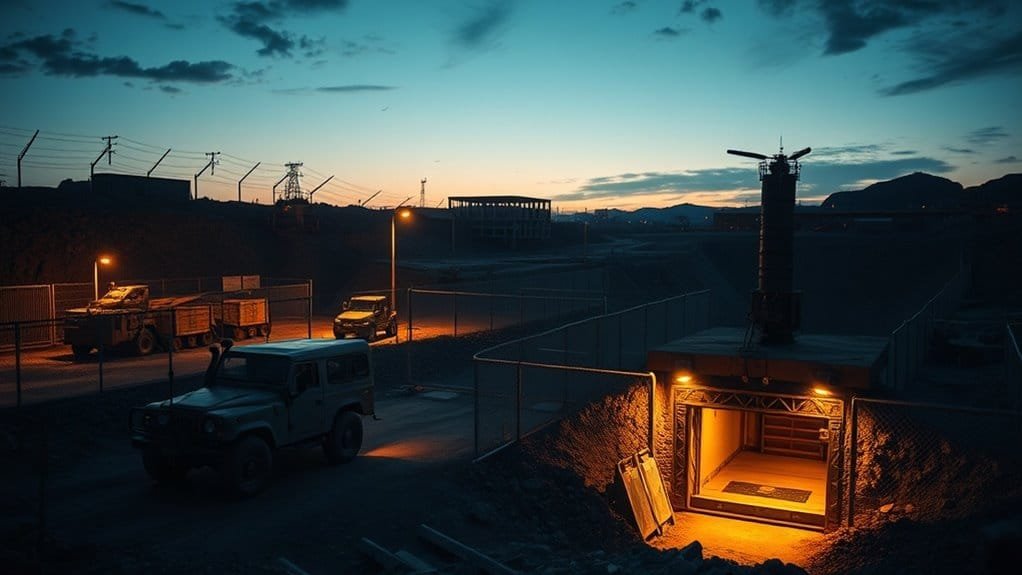
While you manage a profitable mining operation, security isn’t an optional upgrade—it’s the foundational bedrock. Protecting your mining operations starts with implementing robust cybersecurity measures like firewalls to block unauthorized access. This defends against threats like cryptojacking, where attackers steal your hashrate, and malware designed to cripple your rigs. You must prioritize software updates to patch critical vulnerabilities and practice secure key management for your wallets. Continuously monitoring performance and resource usage lets you spot anomalies that signal a breach. Finally, encrypting sensitive data shields your operational details and directly protects the integrity of mined coins from theft or compromise. Enhancing security also involves optimizing your hardware to reduce attack vectors, such as by using energy-efficient 80 Plus certified PSUs to ensure stable and efficient power delivery.
Your First Line of Defense: Physical Security
Your mining rigs’ high-value hardware makes them a target. Robust physical security starts with strict access control; lock doors and limit keys to deter unauthorized personnel. Install surveillance cameras to monitor your facility continuously. Protect your valuable hardware inside tamper-proof enclosures to prevent sabotage and ensure operational integrity. You must also guard against environmental hazards like fire or flooding, which can cause devastating financial losses. This principle of protecting assets extends to digital transactions, where technologies like zk-SNARKs are used to verify data without exposing it. Schedule regular security audits to test these measures. These audits identify weaknesses before criminals or accidents do, allowing you to reinforce your defenses proactively. This foundational layer protects your capital investment and keeps your mining operation running.
Securing the Node and Wallet Foundation

Physical security protects hardware, but the digital integrity of your mining operation demands equal focus. You start by securing the network. A robust firewall and a reliable VPN shield your node from direct attacks, reducing risks like unauthorized access. You must diligently apply all software updates to patch vulnerabilities exploited by malicious software. Proactive compliance strategies integrating AML procedures can further safeguard your operation from regulatory risks. For your mined assets, prioritize cold wallets for long-term storage, keeping them offline and safe. Always enable two-factor authentication on any connected service to add a critical barrier. These steps protect your transaction data and contribute to the overall security of the blockchain by preventing node compromise.
How to Isolate and Anonymize Mining Traffic
VPN/Tor | Masks originating IP address
SSL/TLS | Encrypts data in transit
Firewall Rules | Restricts unauthorized access
To achieve a higher level of privacy, miners can utilize private coins for transaction anonymity.
Choosing Privacy-Focused Mining Software

Privacy-focused mining software masks your IP address and encrypts traffic, separating your identity from mining activity. It routes your operations through secure channels, anonymizing IP addresses via tools like Tor integration. You should select software that supports coin mixing or transaction obfuscation to further protect your mined cryptocurrency from tracing, especially when dealing with coins utilizing zk-SNARKs technology or advanced ring signatures. Opt for solutions with built-in wallet integrations to keep your assets secure from unauthorized access. Prioritize software with robust, regularly updated security features to guard against vulnerabilities. Finally, ensure the tool has strong community support, which is crucial for maintaining its defensive capabilities against evolving threats in a tightening regulatory landscape.
Securing Your Connection to Mining Pools
While securing your mining software is essential, a vulnerable connection to your pool undermines all other defenses. Your connection itself needs active securing. Attackers target mining pools to intercept rewards via unauthorized access. You should always use VPNs to encrypt your data in transit, shielding your activity, similar to how privacy coins integrate technologies like Tor and I2P to obscure user activity. Enable two-factor authentication on your pool account; this simple step is a critical barrier. Keep your mining software updated to patch known vulnerabilities that hackers exploit. Finally, monitor your network traffic for anomalies, as unusual patterns can signal hijacking attempts on your mining operations. This multi-layered approach fortifies the link between your rig and the pool, protecting your earnings.
Mining Privacy Coins in a Regulated World

| Regulatory Challenge | Impact on Mining | Your Security Action |
|---|---|---|
| Know Your Customer laws | Can link your identity to mining rewards | Use separate, secure wallets for payouts |
| Banking services denial | Limits fiat conversion for operations | Diversify off-ramp options preemptively |
| Anti-Money Laundering rules | Increases transaction scrutiny | Isolate mining earnings from other funds |
| Exchange delistings | Reduces liquidity for privacy coins | Plan for peer-to-peer or DEX trading |
| Enhanced security needs | Protects transaction anonymity | Employ full-disk encryption and VPNs |
This enhanced security is essential for operational continuity, especially when mining assets like Monero which are noted for their robust anonymity.
Operational Security for Daily Mining
Since you’ve secured your setup against regulatory exposure, hardening the day-to-day defenses of your mining operation is the critical next step. Your operational security must now focus on real-time threats to your infrastructure and digital assets. You’ll need to implement robust cybersecurity measures and maintain strict protocols for every aspect of your daily work.
- Apply and consistently update all mining software and system patches to close vulnerabilities exploited by malware attacks.
- Enforce strict employee training on phishing to prevent credential theft and unauthorized access.
- Implement continuous monitoring the network for anomalous traffic or performance dips that signal a compromise.
- Immediately transfer mined coins to offline secure storage solutions, like hardware wallets, to safeguard your digital assets.
How to Respond to a Security Breach

Despite your best defenses, a security breach can still occur, demanding an immediate and structured response to contain the damage and restore integrity. Your first step is isolating affected systems, including any compromised hardware, by disconnecting them from the network. Immediately activate your incident response plan. You must then systematically assess breach scope to understand what was accessed. Promptly notify stakeholders as legally required, maintaining transparency. A detailed forensic analysis follows to pinpoint the attack’s origin. This investigation informs critical updates to your protocols. You’ll enhance security by strengthening access controls and patching systems. These actions directly mitigate vulnerabilities and are essential to prevent future incidents, ensuring your operation’s long-term safety.
Should You Insure Your Mining Operation?
Why consider insurance for a mining operation? It directly mitigates your exposure to major financial losses. Your investment in specialized mining hardware is substantial, and risks like theft, fire, or electrical damage are real. A robust policy acts as a critical safety net, preserving your capital and operational continuity.
You’ll find insuring your mining operation involves specific coverages:
- Property Coverage: Protects your physical assets, including expensive ASICs and infrastructure, from damage or theft.
- Liability Insurance: Covers costs if someone is injured at your mining site.
- Business Interruption: Compensates for lost income during unexpected downtime.
- Cyber Risk: Addresses losses from cyberattacks targeting your mining pool or control software.
Insurers require meticulous documentation of your equipment’s value, operational procedures, and security measures to underwrite the policy effectively. This process itself reinforces your operation’s safety posture.
Navigating Tax Reporting for Private Rewards

When you receive mining rewards from a private coin, you’ve immediately incurred a tax liability. Those mined coins are gross income at their fair market value the moment you control them, regardless of the coin’s privacy features. You must carefully assess the full tax implications, which can include self-employment taxes if your activity constitutes a business. To protect yourself, maintain meticulous record-keeping for all transactions. You can offset your mining rewards income with deductible expenses, like hardware costs and operational expenses. When you later sell the assets, you’ll also face capital gains tax on any appreciation from that initial valuation point.
The Evolving Threat Landscape for Miners
As you secure your mining operations in 2026, the threat landscape has expanded far beyond hardware failures and volatile markets. You now face sophisticated digital threats that directly attack your infrastructure and profitability. These evolving threats demand a proactive security stance to protect your assets and ensure operational continuity.
- Cryptojacking scripts stealthily hijack your hardware, stealing your hashrate and inflating your energy consumption.
- Advanced mining malware can infect your rigs, disguising itself to evade basic detection and corrupting your systems.
- Exploiting cybersecurity vulnerabilities in mining pools or your own network can lead to stolen rewards or a complete shutdown.
- Neglecting specialized antivirus tools and anti-malware tools leaves you exposed, allowing these threats to drive up your operational costs unnoticed.
Adopting secure operational practices is your primary defense against this complex environment.
Maintaining a Long-Term Security Posture

A proactive security stance must become a permanent operational framework. You must secure the network with layered cybersecurity measures like firewalls to stop malware targeting your infrastructure. Consistently apply software updates to patch vulnerabilities that could lead to financial losses. Actively monitoring system performance helps you detect anomalies, such as unauthorized cryptojacking consuming your resources to mine, before they compromise your operational integrity. For the assets you earn, move them to cold storage to keep them offline and safe from remote attacks. This disciplined, ongoing approach protects your investment and ensures your mining remains profitable and secure against evolving threats.
Frequently Asked Questions
What Are the Benefits of Coin Mining?
You’ll earn mining rewards, but you must manage energy consumption, hardware costs, and market volatility. Choosing between solo and pool mining affects profit margins as mining difficulty and technological advancements rise.
Can FBI Track BTC Wallet?
Yes, the FBI treats Bitcoin tracking like a digital magnifying glass. They use blockchain analysis for transaction tracing, gather evidence through digital forensics, and rely on wallet privacy being compromised to address anonymity concerns and enforce cybercrime prevention.
Why Do Crypto Coins Need to Be Mined?
You need mining algorithms to secure decentralized networks. They verify transactions on blockchain technology via mining pools that consume energy and require hardware. You’re rewarded for protecting the ledger’s integrity with your computational work.
Is Coin Mining Safe?
Coin mining is safe? Only if you enjoy paying for hardware fried by overheating and software riddled with holes. Your operational integrity demands constant risk assessment against cryptojacking and compliance chaos.
Summarizing
Think of security not as a cost, but as a long-term investment in your mining’s future. By taking these steps, you’re not just avoiding trouble; you’re building a resilient operation that can weather the changing seasons. You’re transforming that digital income into something lasting and stable, letting you rest easy while your machines quietly do their work.

