


Different cryptocurrencies offer unique anonymity because they’re built on distinct cryptographic foundations. You’ll find everything from transparent ledgers to fully shielded transactions, depending on the coin’s goal. Some, like Monero, hide every detail by default, while others, like Zcash, give you a choice. Their underlying privacy engines—ring signatures, zero-knowledge proofs, or mixing—are what create these different levels of protection. See how each one stacks up for your needs ahead.
Table of Contents
Brief Overview
- Different coins implement distinct cryptographic techniques, like ring signatures or zero-knowledge proofs.
- They are built on varying philosophies, ranging from mandatory to optional privacy for all users.
- Unique designs address different trade-offs between anonymity, regulatory compliance, and transaction efficiency.
- Their development communities prioritize different aspects, such as fungibility or selective transparency.
- They respond to diverse user needs and evolving regulatory environments that shape privacy features.
The Crypto Privacy Spectrum: Transparent to Untraceable

While you might think cryptocurrency transactions are anonymous, most operate on a spectrum from transparent to untraceable. Public blockchains offer limited privacy, but privacy coins like Monero and Zcash use advanced cryptographic techniques for transaction privacy. Monero achieves near-complete untraceability, while Zcash offers selective transparency to balance user anonymity with regulatory frameworks. For instance, Zcash utilizes a dual-transaction system with both transparent and shielded options, the latter employing advanced zero-knowledge proofs. Your choice impacts your financial privacy and how your financial transactions interact with evolving blockchain technology rules. Understanding this spectrum helps you select the right tool for your needs, prioritizing either robust anonymity or compliant traceability.
The Privacy Engine: Core Cryptographic Techniques Explained
The cryptographic engine driving privacy coins transforms transparent ledgers into confidential financial systems. You understand these core principles protect your transaction data. Ring Signatures obfuscate a transaction by mixing your signature with others, making the true sender indistinguishable. Stealth Addresses enhance user anonymity by creating a unique, one-time destination for each payment, preventing address reuse. Zero-Knowledge Proofs validate a transaction without revealing any details, like the amount or parties. Ring Confidential Transactions combine these privacy features to hide both the participants and the value transferred. These cryptographic techniques, deployed differently across the cryptocurrency ecosystem, form the foundational layers of secure, private financial activity. For instance, Zcash utilizes zk-SNARKs to provide users with the option for fully shielded transactions.
Privacy in Practice: Monero, Zcash, and Dash Compared
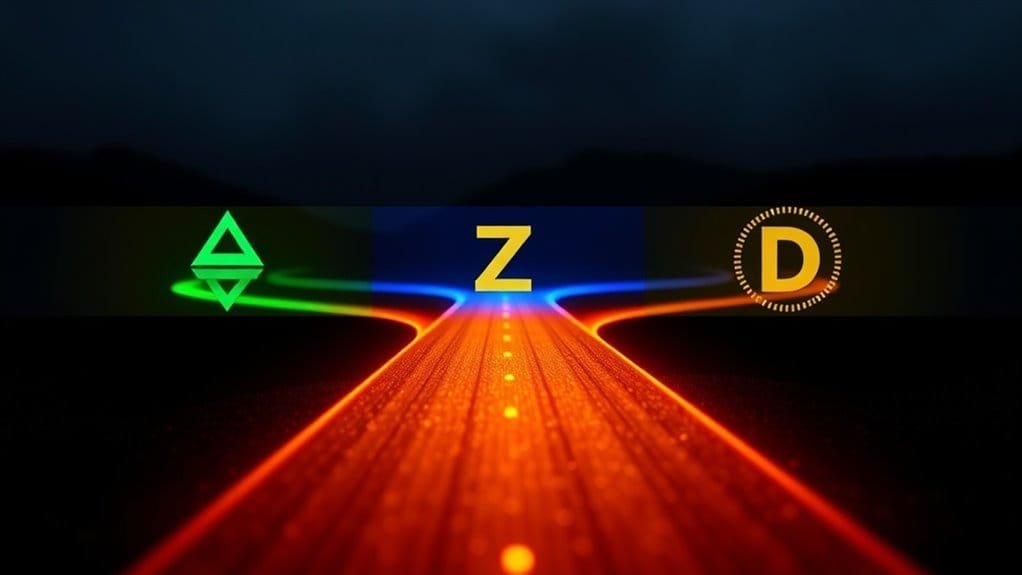
To understand privacy in the real world, look at how leading coins implement it. These privacy coins provide security through different methods, affecting your anonymity and transaction history. Monero uses default privacy features like ring signatures to obfuscate all transactions. Zcash offers optional privacy through its unique transparency, letting you choose to shield details. Dash uses its PrivateSend feature to mix transactions, an optional privacy method. Monero’s continuous innovation maintains strong user anonymity through technologies like advanced ring signatures.
| Coin | Privacy Model |
|---|---|
| Monero | Mandatory anonymity for all transactions |
| Zcash | Optional privacy via shielded addresses |
| Dash | Optional privacy via CoinJoin mixing |
| Primary Goal | Fungibility & untraceability |
| User Action | Monero: none; Zcash/Dash: must opt-in |
Privacy Coins in a Regulated World: The 2026 Reality
Privacy coins operate in a tightly constrained environment in 2026, shaped directly by the EU’s MiCA framework and expanding FATF Travel Rule enforcement. You must now navigate stringent regulatory frameworks that demand significant compliance measures. To maintain market viability and financial integrity, major platforms enforce strict KYC/AML procedures, which can conflict with core promises of user anonymity. This push for transparency aims to curb illicit activities but challenges the fundamental design of these assets. Proactive projects are therefore implementing regulatory-friendly technologies like zero-knowledge proofs to achieve this balance. While advances in blockchain technology continue, the future for privacy coins depends on balancing robust privacy with regulatory acceptance, a difficult equilibrium that defines their utility and safety for you.
How to Choose a Privacy Coin: A 2026 Decision Framework

Ultimately, choosing a privacy coin in 2026 means navigating a landscape transformed by regulation and technological specialization. You must carefully evaluate each project’s anonymity features; Monero provides default obfuscation, while Zcash offers optional privacy via zk-SNARKs. The strict regulatory environment directly impacts a coin’s viability, so prioritize projects with robust compliance strategies. Assess a coin’s fungibility, as this is critical for true financial privacy and safety. Compare transaction fees and network speed for practical use. Crucially, investigate the ongoing community support and development activity; a strong team is essential to promptly address security vulnerabilities and maintain the protocol’s integrity. Consider the integration of obscuring IP addresses through networks like Tor or I2P, as offered by coins like Verge, for an additional layer of transactional anonymity.
Frequently Asked Questions
Which Cryptocurrency Is Best for Anonymity?
Monero offers the strongest privacy features for anonymity due to its untraceable protocol, but you should also consider its user adoption, regulatory challenges, and wallet options when evaluating your security needs.
Which Coin Is Preferred for Anonymous Transactions?
Monero’s preferred for strong anonymity due to its default privacy features and robust community trust, though you’ll face regulatory challenges. You must assess technology differences, market adoption, and your own wallet options.
What Is the Point of All the Different Crypto Coins?
Different crypto coins exist because they meet varied needs—your preferences for transaction speeds, platform usability, or safety drive crypto diversity. This variety helps you adapt investment strategies to regulatory impacts and future predictions.
Which Crypto Is Known for Its Anonymity?
Monero’s lead, with over 1,700 daily active addresses, shows adoption driven by its default privacy features, strong community support, and technology differences like ring signatures that ensure anonymity.
Summarizing
So you’re weighing privacy coins and a news alert pops up: another exchange delists one. It’s no coincidence. That’s the core difference in action. Your choice dictates your trail. In 2026, perfect anonymity faces real-world pressure. Pick your coin not just for its tech, but for how it survives. Your need for privacy meets their fight to exist—make your map with that collision in mind.

