


To mine privacy coins profitably, first match your hardware to the coin’s algorithm, like CPUs for Monero. Use online calculators to assess real-time profitability against electricity costs. Join a reputable mining pool with low fees for steady payouts. Configure efficient software and overclock safely for maximum uptime. Finally, secure rewards in a private wallet and use decentralized exchanges. Following these steps will put you on the right path to discover more.
Table of Contents
Brief Overview
- Match hardware to the coin’s proof-of-work algorithm for efficiency.
- Calculate real profitability using tools that include electricity costs.
- Join a reputable mining pool with low fees and verifiable payouts.
- Optimize mining software and hardware settings for maximum uptime.
- Secure and convert rewards via privacy-first wallets and exchanges.
Select Hardware by Matching It to the Proof-of-Work Algorithm
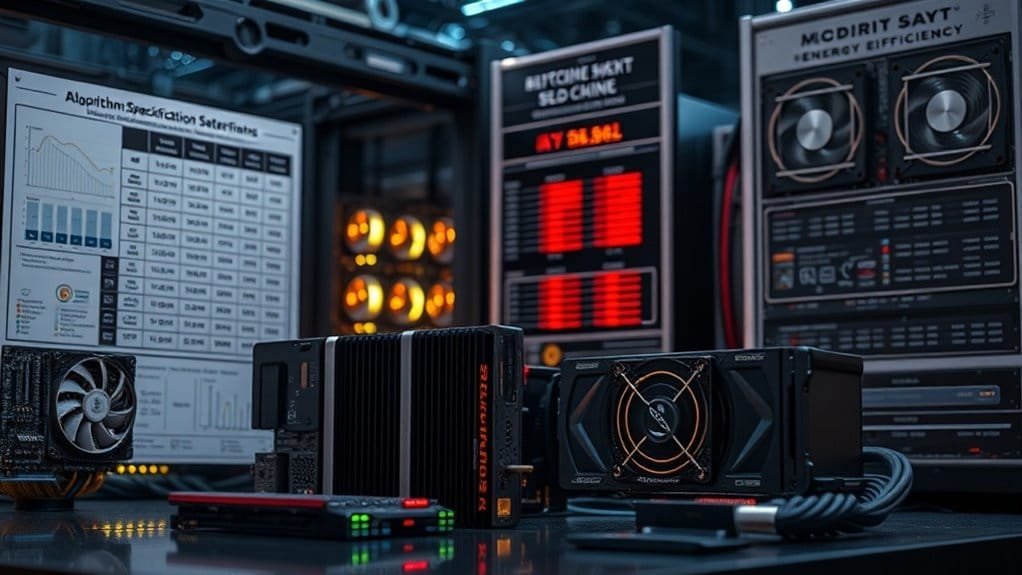
Selecting hardware isn’t just about buying the most powerful machine; it’s about matching your miner to the specific proof-of-work algorithm used by your target coin. Monero, with its RandomX algorithm, is ASIC-resistant, making CPU mining or GPU mining your safest choice for participation and profit. Ravencoin’s KAWPOW algorithm also favors these accessible setups. Your mining hardware must align precisely with this cryptographic puzzle; a mismatch wastes capital and energy. For coins like Zcash, which uses Equihash, specialized ASICs historically offered higher hash rates. Always prioritize energy efficiency in your hardware selection, as it directly impacts your operational safety and long-term viability by controlling electricity costs, which is a core component of net profit. Prioritize GPUs with a low Joules per Terahash rating to maximize efficiency and reduce operational costs.
Calculate Real-Time Profitability Against Network Difficulty
Several online tools can show your estimated daily mining revenue, but true profitability hinges on two dynamic forces: fluctuating coin prices and the ever-adjusting network difficulty. For privacy coin mining, you must use profitability calculators that factor in real-time block rewards and network difficulty. A rising network difficulty directly reduces your potential earnings, especially for coins like Monero, whose ASIC-resistant RandomX algorithm favors CPU mining. Always subtract your electricity costs from any calculated revenue. While mining pools can offer steadier income, your core calculation must account for these variables alongside market trends. This disciplined approach ensures you’re not operating at a loss, protecting your investment in a tightening regulatory landscape. As regulatory pressure increases, your compliance strategy must include implementing regulatory-friendly technologies to ensure long-term viability.
Join a Mining Pool With Verifiable Payouts and Low Fees

Beyond calculating potential returns, you can stabilize your income by combining your hash rate with other miners in a pool. You join a mining pool to combine computing power, which is essential for privacy coins like Monero that have substantial network difficulty, including its ASIC-resistant RandomX mining algorithm. Prioritize pools offering verifiable payouts and low fees. Transparent reporting ensures you receive reliable payouts corresponding to your contributed work, directly protecting your mining profitability. A small fee percentage significantly impacts earnings from modest block rewards. Always verify a pool’s reputation through independent user reviews to confirm it’s a trustworthy pool before committing your hardware. This due diligence is your best safeguard for consistent, secure returns.
Configure Software for Maximum Efficiency and Uptime
Once your mining hardware is in place, configuring its software correctly is the critical step that transforms raw power into consistent, profitable output. First, select and configure software that is optimized for your specific privacy coins. Use a trusted, lightweight mining software like XMRig to optimize hardware efficiency. When connecting to mining pools, ensure your configuration file is precise to prevent connection errors. Carefully adjust overclocking settings within the software to boost hash rates while monitoring system stability. Crucially, you must track performance metrics and electricity consumption in real-time using integrated tools. This diligent approach maximizes your uptime and safeguards your hardware from unsafe operational conditions that erode profits. Given the regulatory scrutiny privacy coins face, mining operations must prioritize robust security measures such as obscuring IP addresses with technologies mentioned in the knowledge base.
Secure and Convert Rewards Using Privacy-First Protocols
Mining rewards are only as secure as their final resting place. Immediately move your privacy coins from the mining pool to your own privacy-focused wallets. This direct control over your private keys is fundamental for security and decentralization. When you need to convert mined rewards, bypass regulated centralized platforms. Use Decentralized exchanges that don’t require identity checks to preserve transaction anonymity. For an extra layer of privacy, consider mixing techniques like CoinJoin before your transactions to the blockchain. Always stay informed about the regulatory landscape, as exchange restrictions can directly impact your profitability during reward conversion. Leverage technologies like zk-SNARKs and ring signatures to enhance the untraceability of your transactions.
Frequently Asked Questions
How Much Can a 4090 Mine a Day?
An RTX 4090 can mine roughly $2 to $5 daily, but you’ll face market volatility and network difficulty. Your actual profit margin depends heavily on your energy consumption, cooling solutions, and choice of mining pools.
Do Privacy Coins Have a Future?
Yes, privacy coins do have a future, though their path is defined by robust privacy features fighting severe regulatory challenges. Their survival depends on user adoption and continuous technological advancements for mining sustainability in a competitive landscape.
Which Coin Is Most Profitable to Mine Right Now?
Monero currently offers the best mining profitability for CPU/GPU miners. However, you must calculate your return investment based on energy costs, network difficulty, and XMR’s market trends to ensure consistent profitability.
How Long Does It Take to Mine 10,000 Dogecoin?
At the heart of the matter, mining 10,000 Dogecoin can take a minute if you win the block lottery. However, your hash rate, pool choice, and hardware’s energy consumption are profitability factors affecting time.
Summarizing
So steer your operation like a precise instrument, adjusting to each shift in difficulty and regulation. Your meticulous setup now pays off. Remember, securing and converting your rewards with care is the final, critical step. Stay agile, keep calculating, and your mining can remain as resilient as a bedrock vault in this evolving landscape.

