


You must secure your hardware in a locked location and protect your network with a strong firewall and VPN. Always apply software updates and enforce two-factor authentication. Move your rewards to a hardware wallet for ultimate cold storage. Choose mining pools with robust security and anonymity. Continuously monitor for unusual traffic to detect threats swiftly. Following these layers of protection will keep your operation safe—and there’s more to explore on each critical step.
Table of Contents
Brief Overview
- Secure and segment the physical mining network using firewalls and traffic monitoring.
- Harden software with strict access controls, encryption, and regular vulnerability audits.
- Protect earnings with advanced wallet strategies like cold storage and multi-signature setups.
- Choose mining pools that prioritize security, encryption, and strong authentication methods.
- Continuously monitor for threats and understand advanced privacy coin cryptographic techniques.
Secure Your Physical Mining Hardware and Network
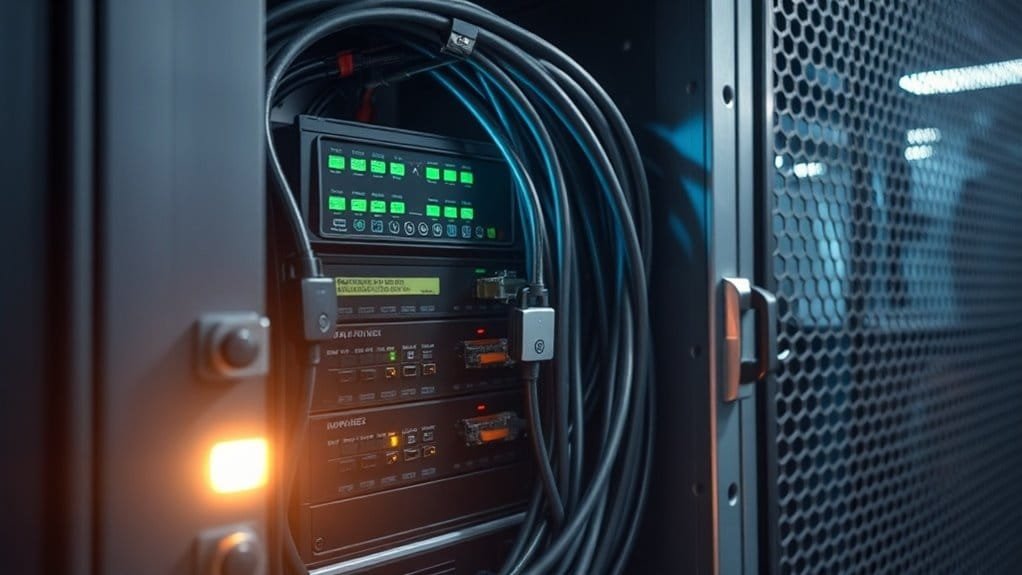
While physical and network security might seem obvious, overlooking them directly undermines the core financial privacy you’re mining to protect. Start by securing your hardware in a locked, access-controlled location to prevent physical theft. Your network is your next frontline; implement a robust firewall and a reliable VPN to encrypt all data transmission, shielding your operation from unauthorized cyber intrusions. These foundational security measures are non-negotiable because a breach here exposes everything. The sensitive information related to your mining activities and the digital wallets you use to store earnings becomes immediately vulnerable. Segment your mining network from other systems and monitor traffic for unusual activity to contain any potential threat swiftly. For enhanced physical security, ensure your operation’s energy storage solutions remain secure to maintain protection during power fluctuations or outages.
Harden Your Mining Rig’s Software and Configuration
| Layer | Action | Purpose |
|---|---|---|
| Software | Apply all updates | Close known attack vectors |
| Access | Enforce 2FA & strong passwords | Prevent unauthorized control |
| Configuration | Use secure connections (SSL/TLS) | Encrypt data in transit |
Integrating AML and KYC procedures directly protects your mining rig and its operations.
Protect Mining Rewards With Advanced Wallet Strategies

Anyone mining privacy coins faces a direct challenge: securing accumulated rewards against persistent threats. Your wallet strategy is your final, critical defense. You must proactively protect your earnings from theft and loss by employing robust, offline-first methods. Privacy coins utilize advanced encryption technology to ensure a high level of security and anonymity in transactions, which extends to the security of stored assets.
- Embrace Ultimate Cold Storage: Isolate your wealth from the internet entirely by moving rewards to a hardware wallet for impregnable security.
- Require Collective Approval: Use multi-signature wallets so no single point of failure can drain your funds.
- Lock Down Every Access Point: Fortify all wallet interfaces with two-factor authentication to stop credential theft.
- Never Rely on a Single Vault: Diversify mining rewards across several secure wallets to contain any potential breach.
Always back up your wallet seeds in secure encrypted formats.
Select a Mining Pool for Security and Privacy
Your mining pool isn’t just a profit center—it’s a critical operational security node in 2026’s regulated landscape. When selecting mining pools for a privacy coin like Monero, your primary goal is maintaining anonymity. Choose a pool that doesn’t require personal identification. Next, verify it employs robust security measures, including multi-signature wallets and two-factor authentication. This safeguards your earnings from unauthorized access. Finally, ensure the pool uses strong encryption protocols for all data transmission. This protects your connection and operational details. To further support network integrity, prioritize pools that use Monero’s ASIC-resistant RandomX mining algorithm to promote decentralized governance. These combined security measures shield your activity, making the pool a secure partner in an environment where operational privacy is paramount.
Mitigate Common Privacy Mining Attacks and Exploits

- Imagine your hard-mined coins silently drained by an undetected keylogger.
- Picture your rigs enslaved in a botnet, mining for a stranger.
- Feel the violation of a remote hacker turning your security camera against you.
- Confront the panic of discovering your wallet emptied from a single phishing click.
- Understand how privacy coins like Monero and Zcash use advanced cryptographic techniques such as ring signatures and zk-SNARKs to protect transaction anonymity.
Establish a Proactive Threat Monitoring Routine
Beyond mitigating specific attacks, sustained security requires constant vigilance. In crypto mining, especially for privacy-focused coins, your operations face persistent risks. You must establish a proactive threat monitoring routine. This involves continuous monitoring of network traffic for unusual patterns that may indicate cryptojacking or a breach. Implement real-time threat detection tools to get immediate alerts on suspicious behavior targeting your mining hardware. Regularly review system logs and performance metrics to spot anomalies that drain your power or efficiency. Set up automated alerts for unauthorized access attempts. This is especially crucial for miners processing shielded transactions, as their enhanced privacy features can attract targeted scrutiny and attacks. This routine is an effective crypto defense strategy, directly addressing the risks associated with hostile networks and ensuring your mining remains secure and controlled.
Frequently Asked Questions
Which Security Measure Is Most Commonly Used to Protect Users of Cryptocurrency?
Two-factor authentication is the most common. Combine it with wallet protection and encryption techniques for strong security, directly safeguarding your assets and user anonymity during transactions.
What Is Cryptomining Protection?
Isn’t cryptomining protection vital for your assets? It’s the suite of security practices you use to mitigate cryptomining risks. You’ll defend operations with secure mining software, network security, hardware wallets, and decentralized solutions for true privacy protection.
Is Blockchain Really Unhackable?
No, blockchain isn’t unhackable. Your security depends on strong consensus mechanisms, careful smart contract security, and ironclad private key management. Decentralized networks still face attack vectors and other blockchain vulnerabilities you must understand.
How to Protect Your Cryptocurrency From Hackers?
Fortify your digital vault by using secure wallets, multi-factor authentication, and cold storage for private keys. Conduct regular updates, maintain phishing awareness, and create strong passwords to defend your cryptocurrency from hackers.
Summarizing
Neglecting your mining operation’s security is like leaving a vault wide open in a hurricane. You must vigilantly protect your hardware, software, and rewards. By selecting the right pool and establishing proactive monitoring, you build an impregnable fortress for your network’s core. This final layer of defense is absolutely critical, ensuring the entire system’s legendary privacy isn’t compromised from the very first block.

