


First, choose ASIC-resistant coins like Monero and get a secure wallet. You’ll need to match your hardware to the algorithm, prioritizing a high-performance CPU for RandomX. Download software like XMRig and configure it for your pool and wallet. Joining a reliable mining pool ensures steadier rewards. Always balance hash rate with power costs and monitor regulations. Understanding these core techniques sets a strong foundation for your entire operation.
Table of Contents
Brief Overview
- Prioritize high-performance CPUs for mining ASIC-resistant coins like Monero.
- Use specialized mining software configured for your specific hardware and coin.
- Join a reputable mining pool to achieve more consistent, smaller rewards.
- Optimize for energy efficiency by balancing hash rate with power costs.
- Regularly update software and monitor hardware temperatures for peak performance.
How to Start Mining Privacy Coins

While choosing which privacy coin to mine depends on your hardware and goals, Monero (XMR) remains the most popular option due to its strong, default-on privacy and active mining community. You first need a secure wallet to receive your mined cryptocurrency. Next, download specialized mining software like XMRig, configuring it for your hardware—a powerful CPU or GPU for Monero. You’ll join a mining pool to combine resources for more consistent rewards. This process secures the coin’s blockchain, contributing to the ecosystem of financial freedom. Monero’s ASIC-resistant RandomX algorithm ensures mining remains decentralized and accessible to individuals. Avoid inefficient ASIC miners for XMR, as its algorithm resists them. Your setup validates transactions for this leading privacy coin, turning computational work into private digital assets.
Select Hardware for Privacy Coin Algorithms
Your hardware selection directly determines your mining efficiency and profitability for any privacy coin. You must match your equipment to the coin’s specific algorithm. For instance, Monero’s RandomX algorithm favors high-performance CPUs, while other coins might require an ASIC or GPU. Prioritize efficiency to manage costs and ensure operational safety.
- Analyze the algorithm: Monero mining thrives on CPUs like AMD Ryzen 9, whereas Zcash historically used ASICs like the Antminer Z15.
- Balance hash rate with power consumption: Efficient hardware reduces electricity costs and heat output.
- Implement adequate cooling solutions: Proper cooling protects your investment and maintains stable performance.
- Consider joining mining pools: They aggregate hardware power for more consistent rewards on privacy coins.
- Prioritize GPUs with a low Joules per Terahash rating and choose energy-efficient 80 Plus certified PSUs.
Choose and Configure Your Mining Software
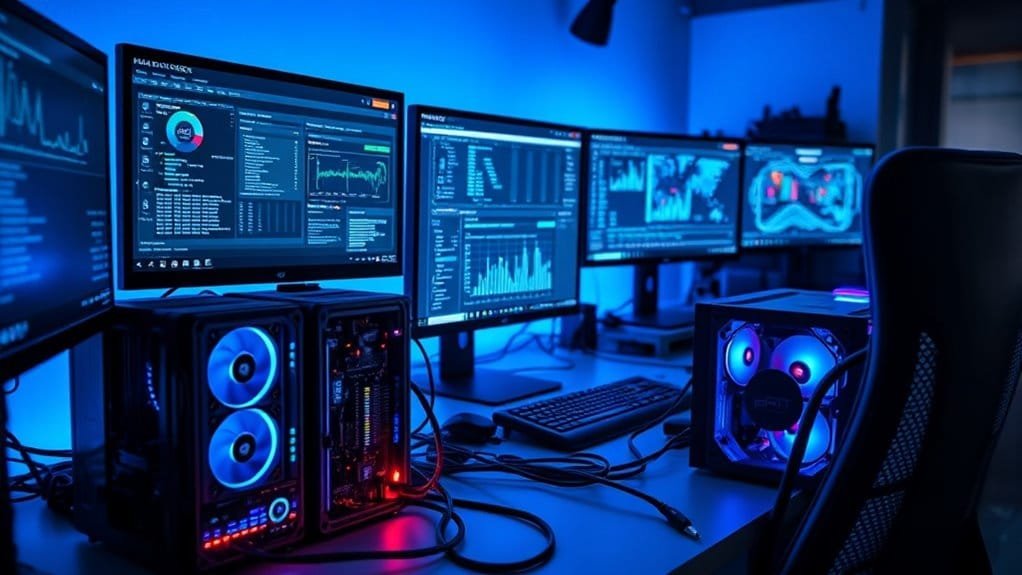
Once you’ve selected the correct hardware, the next critical step is effectively choosing and configuring your mining software. You must choose compatible mining software for your specific privacy coins, like XMRig for Monero. Correctly configure its settings—pool URL, wallet address, and thread count—to optimize your hash rate. You’ll connect this software to a reliable mining pool for consistent rewards. Continuously monitor performance metrics like temperature and share acceptance to ensure safe, stable operation. For coins like Zcash that utilize zk-SNARKs, your mining software must also properly support its unique privacy protocol. Always update your software to maintain security and incorporate efficiency gains, protecting your investment and maximizing output in today’s competitive landscape.
Join a Privacy Coin Mining Pool
- Combine Resources: Pooling computational power with other miners makes finding blocks more reliable than solo mining.
- Understand Payouts: Many pools use systems like PPLNS to distribute rewards based on your contributed work.
- Select a Secure Pool: Choose established, well-regarded pools to ensure the safety of your earnings and equipment access.
- Maximize Returns: While pools charge small fees, the increased consistency enhances your overall profitability.
- This approach is particularly valuable for mining privacy coins like Monero, which use advanced cryptographic techniques to secure their networks.
Manage Cooling and Energy Costs

Mining hardware generates immense heat and consumes substantial electricity, two operational realities that directly impact your bottom line. You must implement robust cooling systems to prevent overheating and ensure optimal performance for your ASIC miners. Prioritize energy efficiency in all hardware selections to reduce consumption. Investigate renewable energy sources like solar to power mining operations sustainably and cut long-term costs. A strategic location choice with lower electricity rates is critical for profitability. Finally, employ rigorous energy usage monitoring to identify waste and optimize your setup. Managing these factors is essential for safely and sustainably mining privacy coins like Monero, which utilize advanced encryption technology to secure transactions.
Calculate Mining Profitability in 2026
Ultimately, can you profit from mining privacy coins in 2026? Yes, but you must calculate carefully. Your mining profitability hinges on several volatile factors you can manage through diligent planning. You need to model your operational costs against potential rewards, prioritizing safe, sustainable margins.
- Factor in Dynamic Costs: Continuously monitor your energy costs and local regulatory environments, as these directly impact your bottom line and operational security.
- Assess Network & Hardware: Calculate the network difficulty for coins like Monero and research efficient hardware, such as ASICs for relevant chains, to control operational costs. You should also consider the efficiency gains from upgrades like Zcash’s Halo Arc update.
- Model Reward Scenarios: Project your earnings based on the coin’s block reward and price within the broader cryptocurrency market.
- Stress-Test for Volatility: Run calculations under various market conditions to ensure your setup remains profitable during downturns.
How Regulations Impact Mining Operations

Mining privacy coins requires navigating a complex regulatory environment where regulatory pressure has led to significant exchange delistings.
| Regulation Type | Impact on Mining | Safety Consideration |
|---|---|---|
| AML/KYC Rules | Requires identity verification, increases operational overhead | Ensures legal compliance, reduces exposure to illicit finance risks |
| Licensing Mandates | Can restrict or ban operations, affecting profitability | Operating without a license poses significant legal jeopardy |
| Exchange Delistings | Reduces liquidity and demand for mined coins | Limits avenues for secure, compliant conversion to fiat currency |
Handle Algorithm Changes and Network Updates
- Track Official Channels: Closely monitor announcements for upcoming hard forks or soft forks to anticipate shifts in block rewards and transaction fees, protecting your revenue.
- Optimize Hardware for Algorithms: When a coin like Monero uses RandomX, you must prioritize CPU setups over other hardware to stay efficient.
- Update Software Promptly: Always run the latest mining software and node versions to remain compatible after network updates.
- Analyze Difficulty Adjustments: Regularly assess how algorithm changes affect mining difficulty to manage costs and maintain profitability safely.
Frequently Asked Questions
Can Privacy Coins Be Tracked?
Privacy coins can be obscured but not perfectly untracked. Sophisticated blockchain analysis tools can challenge transaction obfuscation methods, creating regulatory hurdles that balance your anonymity vs. transparency and will shape the future of cryptocurrencies.
Which Cryptocurrency Is Often Considered More Difficult to Trace Due to Its Privacy Features?
Monero’s privacy protocols, like ring signatures and stealth addresses, make it inherently difficult to trace. These advanced Monero features create strong crypto anonymity through blockchain obfuscation and confidential transactions by default.
How to Make Crypto Money Untraceable?
You can create untraceable transactions with crypto anonymity tools. Use blockchain obfuscation methods like coin mixing services or DEXs for swapping. Employ privacy wallets that use stealth addresses and ring signatures, but be aware of regulatory challenges.
What Are the Top Five Privacy Coins?
You’ll find the top privacy coins offer varying Monero features and Zcash technology for blockchain anonymity. Prioritize coins emphasizing strong security measures and user privacy, especially given today’s regulatory challenges and market trends on decentralized exchanges.
Summarizing
Think of your mining rig as a private forge. You’re not buying a key; you’re hammering the lock shut yourself with every hash. In a world of glass-walled banks, you build a vault from code and current. This silent, steady work does more than earn coin—it mints the very walls of your financial sovereignty, one block at a time. Keep your forge lit.

