

Start by understanding a coin’s core model: is its privacy optional or mandatory? Examine the tech, like zero-knowledge proofs or ring signatures, that hides your transaction data. Don’t ignore network-level privacy from Tor or I2P. Check real-world performance, fees, and wallet support. Finally, match the coin’s strengths to your specific threat level and local regulations. There’s more to uncover for making your final choice.
Table of Contents
Brief Overview
- Identify mandatory versus opt-in privacy models like Monero and Zcash.
- Compare underlying technologies like zero-knowledge proofs and ring signatures.
- Assess network-level privacy measures like integration with Tor or I2P.
- Evaluate performance impacts on transaction speed, fees, and scalability.
- Classify potential adversaries to align privacy needs with coin features.
Opt-In vs. Mandatory Privacy: The Fundamental Divide
While regulatory pressure has intensified since 2024, the core architectural choice between opt-in and mandatory privacy remains the defining split for privacy-focused cryptocurrencies. Opt-In Privacy, like in Zcash, lets you switch privacy features on or off, granting you user control but potentially exposing your transaction history. This can aid market adoption where selective transparency is required. Conversely, mandatory privacy, as with Monero, enforces anonymity on every transaction, offering stronger financial privacy by default. This fundamental design choice carries significant regulatory implications, as systems with optional privacy often face less immediate scrutiny than those where privacy is compulsory and always active for all users. For example, Zcash’s use of zero-knowledge proofs provides this optional, high-level privacy through its shielded transactions.
How Zero-Knowledge Proofs Verify Transactions Secretly
- Conceal All Details: ZKPs mathematically validate a transaction’s correctness while encrypting every sensitive data point on the public ledger.
- Enable Shielded Pools: They create private transaction pools where coins become fungible and untraceable.
- Verify Without Revealing: Network nodes confirm a transaction is legitimate without learning anything about the parties or value involved, exemplified by the technology behind Zcash’s Halo Arc which streamlines this verification process.
- Strengthen Financial Sovereignty: This technology provides a robust technical barrier against external monitoring and chain analysis.
How Ring Signatures and Stealth Addresses Obscure Details

If you want to hide who sends and receives a transaction, you need to obscure the details at both ends. Ring Signatures protect your sending activity by mixing your transaction with decoy ones, making it impossible to isolate your true signature. Stealth Addresses create a unique, one-time receiving address for every payment, ensuring incoming funds can’t be linked to your public wallet. Leading privacy coins like Monero use both by default, concealing all transaction details. This combination provides strong anonymity and is essential for financial privacy. This robust privacy is the core feature for users seeking safety from surveillance, ensuring their financial history remains confidential. Coins like Zcash offer an alternative method using zero-knowledge proofs to shield transaction data.
Why Network-Level Privacy Is a Critical Layer
- It masks your IP address, preventing direct linkage to your physical location or internet service provider.
- It obscures transaction origins by routing your data through decentralized networks like Tor and I2P.
- It adds a vital barrier against surveillance and network-level traffic analysis.
- It complements on-chain obfuscation, creating a more complete privacy solution. This layered approach enhances the high security and anonymity provided by privacy coin technologies.
What On-Chain Analysis Can (and Can’t) Reveal

While transparent blockchains offer a public ledger, they also reveal a transaction’s entire history to anyone who looks. On-chain analysis of a Bitcoin transaction can expose amounts, addresses, and timestamps, creating a permanent, traceable record. This fundamentally compromises your financial privacy. However, privacy-focused cryptocurrencies employ advanced cryptographic techniques to counter this. Monero uses ring signatures and stealth addresses to obscure sender, receiver, and amount. Zcash leverages zk-SNARKs to encrypt transaction details. Even Bitcoin can gain some privacy through mixers like CoinJoin, though sophisticated analysis may still detect patterns. Other coins like Dash utilize similar CoinJoin technology for transaction mixing to enhance user anonymity. Ultimately, on-chain analysis struggles to trace transactions that utilize these robust privacy features, making them essential for safety.
Identifying Built-In Transparency Features and Their Risks
- Optional privacy introduces linkage risks. In coins like Zcash, using both transparent and shielded transactions allows analysts to correlate your activity, potentially deanonymizing you.
- Built-in transparency can be exploited. Attackers target the predictable patterns created when users selectively engage privacy modes. Projects integrating optional transparency features like view keys can help balance privacy with necessary regulatory compliance.
- Full-time privacy offers stronger protection. Monero’s mandatory privacy features, like ring signatures, provide continuous anonymity without optional modes.
- Trust-based systems carry vulnerabilities. Some privacy coins rely on trusted parties for optional mixing, which can fail or be compromised.
Navigating the 2026 Regulatory and Exchange Landscape

The 2026 landscape for privacy coins is defined by stringent new regulations, including MiCA in the EU and expanded FATF Travel Rule enforcement. You must stay informed about your local regulatory landscape as these rules directly impact access. Exchange scrutiny has intensified, leading to delistings that can severely affect liquidity and user adoption. When using an exchange, its KYC regulations will compromise your anonymity by linking your identity to your activity, even for privacy coins. To preserve financial confidentiality, prioritize platforms and protocols developing features for selective disclosure, allowing you to reveal specific transaction details only when legally necessary. This balance is key to navigating this restrictive environment safely.
Comparing Transaction Speed, Fees, and Scalability
As you move beyond regulatory hurdles, the practical performance of a privacy coin—its speed, cost, and ability to scale—directly impacts its utility for daily transactions.
- Transaction Speed: Monero leads in raw throughput (~1,700 TPS), while others like Zcash (6-20 TPS) may feel slower, especially during network congestion.
- Transaction Fees: Most privacy coins maintain very low fees, often around $0.001, which preserves value and encourages regular use.
- Scalability: Monero’s dynamic block size enhances its scalability by adapting to demand, whereas coins with fixed blocks can limit throughput.
- Practical Impact: Network congestion can degrade user experience; a coin’s architectural choices dictate its real-world performance under load.
Evaluating Wallet Support and Overall User Experience
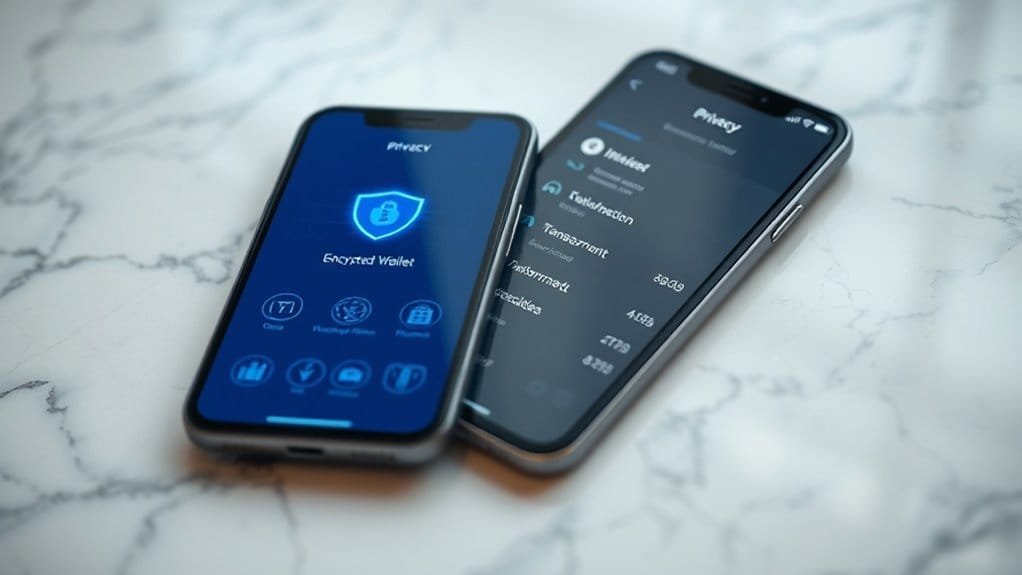
While technical specifications define a coin’s privacy potential, your actual experience hinges on the wallet. First, verify wallet support for your chosen coin, as not all handle the unique transaction methods of Monero or Zcash. Your chosen wallet must also integrate advanced privacy technologies, like CoinJoin or zero-knowledge proofs, which are essential for robust transaction anonymity. Prioritize wallets offering coin control, letting you manually select UTXOs to avoid linking outputs. Intuitive designs in the user interface are critical for safely navigating these privacy features. Finally, never compromise on security measures; ensure the wallet supports hardware integration and uses strong encryption to protect your funds and data throughout the user experience.
Matching a Coin’s Capabilities to Your Threat Model
Before you choose a privacy coin, you must define your specific privacy needs. Are you a casual user or facing sophisticated surveillance? Your threat model determines which coin’s privacy features are necessary for your safety.
- Classify Your Adversary: Identify if you need protection from data brokers or state-level actors.
- Select the Privacy Standard: For strong, consistent safety, choose privacy by default coins like Monero. For lighter needs, coins with optional privacy may suffice.
- Assess the Regulatory Landscape: Verify a coin’s legal status in your jurisdiction to avoid operational risk.
- Verify Ongoing Community Support: Active development is critical for maintaining robust privacy against evolving threats.
- Consider Operational Security: Sustain your privacy by selecting energy-efficient mining hardware to reduce the detectable footprint and cost of supporting the network.
Frequently Asked Questions
What Is the 1% Rule in Crypto?
The 1% Rule limits your exposure, suggesting you only allocate 1% of your portfolio to high-risk assets like privacy coins, balancing their potential rewards against their volatility and regulatory challenges.
Which Cryptocurrency Is Often Considered More Difficult to Trace Due to Its Privacy Features?
Monero (XMR) is generally the most difficult to trace. Its privacy coins employ mandatory anonymity techniques like ring signatures and stealth addresses for comprehensive transaction obfuscation, consistently protecting your user privacy on decentralized networks.
What Does Warren Buffett Say About Crypto?
A leopard can’t change its spots, and Buffett maintains his crypto skepticism. His investment philosophy prioritizes tangible assets over digital currency, citing market volatility and a lack of intrinsic value, despite acknowledging blockchain technology’s future trends.
Can FBI Track BTC Wallet?
Yes, the FBI can track your Bitcoin wallet using blockchain forensic tools for transaction analysis, challenging wallet address anonymity. To enhance your crypto privacy, explore privacy coin comparisons and consider digital footprint reduction techniques.
Summarizing
You’re navigating a financial jungle where transparency is the new terrain. Your toolkit is no longer just a coin, but your understanding of its cryptographic armor. Use this map to choose the right shield for your journey. Don’t just hope for privacy; architect it yourself, turning the overwhelming flood of data into a river you control.

